PC Slower Than It Used to Be?
Crashes, No Sound, or Screen Glitches?
Random freezes, missing sound and display glitches usually trace back to one bad driver. Find and replace yours safely.Free scan · under a minutePC Slower Than It Used to Be?
A free scan shows the junk files, broken settings and background clutter dragging Windows down - then fixes them in one click.Free scan · Windows 10 & 11Outbyte PC Repair · freeA free scan shows the junk files, broken settings and background clutter dragging Windows down - then fixes them in one click.
Run a Free PC Scan →ThatPainter is reader-supported. When you buy through links on our site, we may earn an affiliate commission. Learn More
The 2007 conference Engineered Transparency: Glass in Architecture and Structural Engineering examined what happens when architects ask glass to do more than look transparent. Its central lesson was that glass design involves trade-offs: measures intended to improve thermal performance can impede recycling or diminish the appearance of transparency, while a building’s visual openness may need to be tempered to protect what it contains.
What was the conference about?
Engineered Transparency: Glass in Architecture and Structural Engineering brought architects, engineers, consultants, and manufacturers together at Columbia University to consider glass as both a design material and an engineered part of a building. The event addressed structural design, climate and energy performance, safety, and materials research—not simply the appearance of glass façades.
As an Amazon Associate I earn from qualifying purchases.
Free tools Windows power users keep installed
One-click scans. No signup required.
The chronology matters: SANAA principal Kazuyo Sejima gave the keynote on September 26, 2007, before the main conference on September 27 and 28. Some accounts describe the overall event as running September 26–28, while the institutional descriptions distinguish the opening keynote from the two main conference days. The AIA New York account and TU Dresden’s event notice provide context for the schedule.
The conference’s recurring example was SANAA’s Glass Pavilion at the Toledo Museum of Art in Ohio, a home for the museum’s collection of glass art. According to Joann Gonchar’s Architectural Record report, 30 subsequent speakers cited the pavilion. That figure refers to speakers who brought up the building, not the number of attendees or experts at the event.
Popular on Amazon

- Great Value Paint Brush Set: Soucolor 20 acrylic paint brushes come in 10 different sizes, making them ideal for fine detailing, model painting, rock painting, nail art, face painting, DIY crafts, and general art projects. The varied brush sizes give you better control for both delicate lines and broader color coverage, while the soft bristles deliver smooth, consistent results on acrylic, oil, watercolor, canvas, wood, ceramic, and more.
- Awesome Set of Paint brushes: Professional paint brushes can cover all of your needs. The multi-purposed brushes are ideal for Watercolor, Oil, Gouache, enamel, Acrylic Painting, Body, Nail, Face Painting, Miniature, Model, Wood, Glass, Cup, Ceramic, Fine work, Art class, Craft Art Painting, DIY Art Crafts etc.
- Soft and long-lasting: The bristles are soft and strong, with nickel metal ferrules and blue wooden handles. After cleaning, the bristles will become soft and fluffy again and will not fall off.
- Easy to clean: it’s very convenient to Wash well in soap and water. Retain shape after drying. the brushes hold up very well. Nice selection to beginners and professionals. Keep them clean and they last a long time.
- Perfect for All Painters & Occasions: Suitable for art beginners, hobbyists and professional artists. Great for art class, home creation, travel painting and DIY handmade projects. A practical art gift for students, teachers, family and craft lovers.
That repeated reference made the pavilion a useful shared case rather than a specification template. The conference brought together people who approached the same building from different professional angles: its visual composition, structural framing, climate control, and the needs of the collection. The report does not say that all speakers agreed on a single solution; its account instead shows how the building prompted discussion across those disciplines.
Why did the Glass Pavilion become a touchstone?
The pavilion gave speakers a concrete example of glass’s architectural appeal: transparency, minimal structure, and an impression of simplicity. Its design could make the boundary between rooms appear unusually light, while the building still had to function as a museum environment for sensitive objects.
What’s actually slowing this PC down?
Pick the symptom - the matching free tool is one click away.
Structural engineer Guy Nordenson described the pavilion’s effect as “infrathin,” borrowing the term from Marcel Duchamp to evoke structure that seems to disappear. Architectural Record also recounts Nordenson’s joke that, when he first saw SANAA’s plan in the office, he thought it was a bubble diagram. Both remarks point to the same tension: an apparently effortless, open plan can depend on complex structural work that the finished building intentionally keeps out of view.
That contrast makes the pavilion useful as a case study, but not as proof that a particular glass building strategy works in every setting. The conference report describes the building’s design qualities and the engineering discussions around it; it does not provide product specifications or comparative test results. Its value is as an example of how design ambition and technical requirements meet in a specific building.
The idea of visual lightness should not be confused with an absence of structure. Minimal framing is an architectural effect that has to coexist with the building’s structural demands. The conference’s focus on both architecture and structural engineering captured that distinction: the appearance of a nearly vanishing boundary is one outcome of design and engineering working together, not evidence that engineering can be set aside.
Can a transparent building protect what is inside?
Not through transparency alone. For the Glass Pavilion, the collection’s protection from ultraviolet light required a design response that was not itself transparent: curtains.
Also popular on Amazon

- COMPLETE 5-PIECE BRUSH SET FOR EVERY PAINTING TASK — Includes 1 Inch Flat, 1.5 Inch Angle, 2 Inch Flat, 2 Inch Angle Stubby, and 2.5 Inch Angle brush giving you every size professional painters use daily. Get all 5 for less than the price of a single brush from hardware store brands — professional grade performance at a fraction of the cost. Perfect for walls, trim, cabinets, doors, furniture, and detailed cutting-in work on any project.
- ZERO BRISTLE LOSS — GUARANTEED BY PRECISION ADHESIVE BONDING — Every bristle is locked in place with precision-set adhesive that keeps them in the brush — not in your paint job. The coated steel ferrule provides structural support while the adhesive bond ensures clean performance on every stroke. Premium SRT synthetic filaments load more paint and release it evenly for a smooth streak-free finish on walls, ceilings, and trim. Works with latex, oil-based paint, primer, sealer, and wood stain.
- INCLUDES THE ANGLE STUBBY MOST SETS LEAVE OUT — Professional painters know the 2 Inch Angle Stubby is the go-to brush for tight cabinet interiors, window sashes, inside corners, and detailed trim where standard angle brushes are too long. Combined with the 1.5 and 2.5 inch angle sash brushes you have precision cutting-in covered at every scale — baseboards, crown molding, door casings, and ceiling lines.
- FLAT BRUSHES FOR BROAD SMOOTH COVERAGE ON ANY SURFACE — The 1 and 2 inch flat brushes deliver even coverage on walls, furniture, shelving, doors, fences, decks, and wood surfaces. Ideal for applying primers, stains, varnishes, polyurethane, and specialty coatings. Solid wood handles provide all-day comfort and control for both professional contractors and weekend DIY homeowners tackling interior or exterior painting projects.
- TRUSTED BY PROFESSIONAL PAINTERS AND CONTRACTORS NATIONWIDE — Pro Grade delivers professional-grade results at a price that makes sense for crews who go through brushes on every job. Ideal for property managers, remodeling contractors, apartment turnover crews, maintenance teams, and commercial painting operations. Backed by thousands of verified reviews from working painters. Washable and reusable for multiple projects.
Environmental consultant Matthias Schuler of Transsolar said it took nearly a year to persuade Sejima that curtains were needed to shield the art from ultraviolet light. The report presents this as a collaboration challenge and a design compromise, not as a simple verdict against glass architecture. The building’s visual character had to be reconciled with the needs of the objects it housed.
Schuler summarized the collaborative approach this way: “That’s the way of collaboration,” he said. “You don’t say ‘it won’t work’ and walk out the door.” The point is practical: when an architectural idea meets a conservation or environmental requirement, the useful question is how to resolve the conflict together—not whether one discipline should simply overrule the other.
The example also cautions against treating “transparent” as a complete performance description. A visually open room may still need measures to control light exposure, and those measures can affect the experience of the space. The report does not quantify ultraviolet exposure or specify a current protection strategy; it documents the role curtains played in this particular project.
For designers, the case suggests a sequence of questions rather than a universal prescription: what is the building meant to display or protect, what environmental conditions matter to that use, and how might a necessary control affect the desired spatial experience? In Toledo, the report identifies UV protection for the art and curtains as the response. It does not compare curtains with other technologies or establish that the same response is appropriate for other museums.
Why can better-performing glass look less like glass?
Because interventions intended to change how glazing performs can also alter its appearance or its end-of-life handling. The conference report highlights two related conflicts: some coatings used to improve thermal performance may hinder recycling, and frits or coatings may compromise the visual purity of transparency.
Graham Dodd, a mechanical and façade engineer in Arup’s London office, said that many coatings used to improve glazing’s thermal performance also hinder recycling. That is a reported concern, not a universal claim about every coating or a quantified recycling outcome. The report does not identify specific products, recycling processes, or current guidance, so it cannot establish which present-day glazing choices are recyclable.
Also popular on Amazon

- 【All sizes of art brushes】: The 10 sizes of multi-functional brushes have various shapes, making the mixing color easier, which is very suitable for artists, students, teenagers, children and painters at all levels. Wonderful Present ideas for friends and family who like painting!
- 【general brush set】: Professional paint brush can meet all your needs. Multifunctional brush is very suitable for watercolor, oil, gouache, acrylic painting, body, nail, face painting, miniature, model, ceramics, arts and crafts painting, etc.
- 【high quality process】: It is designed with anti falling bristles, anti-rust nickel ferrule and solid wood handle. You can use the brush to focus on the painting and always be creative.
- 【easy to maintain】: After using the brush, it is very convenient to clean the brush with warm soapy water and reshape the tip of the brush. Air dry the brush and place it on top of the top for long use.
- 【100% satisfaction guarantee - buy now】1 packs of set brushes, you can also get friendly customer service, any questions feel free to contact us, within 24 hours to help you! There is no risk in buying our paint brush kit.
Robert Heintges, a New York City curtain-wall consultant, described the visual side of the problem: “Each manipulation to enhance energy efficiency can render glass less like glass.” His observation captures why the conference treated glass as a material with inherent ironies. A design change may answer one performance goal while making another—the sense of visual clarity—harder to achieve.
These points should not be read as an argument that thermal performance or recycling should be ignored in favor of appearance. Rather, they show why the priorities need to be considered together. A choice that seems beneficial when judged only by energy performance may carry an aesthetic or material-recovery cost; a choice made solely to preserve an unbroken view may conflict with environmental or collection-protection needs.
Coatings and frits should not be treated as interchangeable in every respect simply because both appear in the discussion. The report associates coatings with thermal performance and potential recycling difficulty, while Heintges names frits as well as coatings in connection with visual transparency. It supplies no product-level comparison, measurements, or details about particular treatments. The safe conclusion is limited: these interventions can introduce trade-offs, and the report does not identify a single option that resolves them all.
That distinction matters when comparing design priorities. A project focused on a clear view may judge visual alteration differently from one focused on energy performance; a building team may also need to consider what happens to glazing at the end of its service life. The conference raised these tensions, but did not rank them or assign costs. It offers no figures for energy savings, recycling rates, or the price of different glazing choices.
What other engineering problems did speakers discuss?
The conference addressed blast- and hurricane-resistant design, energy efficiency in glass buildings, and materials research. The AIA New York summary also connects the Glass Pavilion’s design to structural framing and climate engineering, including Nordenson’s structural work and Schuler’s environmental consulting.
Together, these topics put the pavilion’s minimal appearance in context. Glass can be central to a building’s visual identity, but the building still has structural and environmental requirements. A façade that reads as light or nearly absent is not the same thing as a structure without engineering demands. Likewise, a discussion of glass’s transparency cannot be separated from questions about safety, climate control, or what is being protected indoors.
Do these 3 things before closing this tab:
1Fix the driver behind crashes, sound loss and screen glitches2Repair Windows errors before they cause bigger problems3Scan for outdated or missing drivers - takes under a minuteAlso popular on Amazon

- 【KIDS PAINT BRUSHES SET】Anezus paint brushes for kids come with 10 pcs paint brushes of 5pcs round paintbrushes and 5 flat paint brushes with colorful handles, good for the young artist to explore their creativity in painting and crafting
- 【HIGH QUALITY PAINT BRUSHES FOR KIDS】These toddler paint brushes made of soft hog bristle, bright colored handles and rust proof ferrules. The bristles are firmly fixed in the kids paint brushes and no shedding. Each children paint brush measure 6 1/4 inches (16cm) in length and ferrules 1/2"(1.3cm) diameter, large enough for the little hand to grip and control
- 【WIDE APPLICATIONS】With combination of round and flat craft paint brushes for kids, work great with washable paint, tempera paint and acrylic paint. Great for arts and craft, rock, leather, gesso and ceramic, or body, nail and face art painting.
- 【EASY TO CLEAN 】After using paint brushes for acrylic, oil or watercolor painting, it’s very convenient to clean them with warm soapy water and reshape the paint brush tips. Keep these craft paint brushes clean and they last a long time.
- 【GREAT GIFT IDEA】Perfect for students, teens, kids, children and painters of all levels. Wonderful gift idea for girls, boys and kids who love painting! These all-purpose paint brushes for kids are ideal for kids' school projects, birthday parties, painting parties, art parties, back to school supplies, classroom decoration and more.
The safety discussions broaden the comparison beyond appearance and energy use. Blast- and hurricane-resistant design were conference topics, but the report does not describe a particular system, test, or performance threshold. It therefore supports recognizing safety as part of the design problem—not claiming that the Glass Pavilion exemplifies a specific resistance standard or that a named glass assembly meets one.
The report is not a technical manual for resolving those demands. It gives no comparative results for particular glass assemblies, no current code or standard requirements, and no product-level recommendations. Its contribution is to show the range of considerations that designers and engineers brought to the table—and how improving one aspect of a glass building can complicate another.
Independent reader supportYour contribution helps us test, update, and keep practical guides available for everyone.What does the conference teach about designing with glass?
Its most useful lesson is to treat transparency as one design objective among several, rather than as a quality that can be maximized without consequences. The conference report points to four tensions worth keeping distinct:
- Transparency and light control: The Glass Pavilion’s art collection needed ultraviolet protection, and curtains became part of the solution.
- Thermal performance and recycling: Dodd said many thermal-performance coatings can hinder recycling, though the report supplies no product-specific or quantitative comparison.
- Energy measures and visual clarity: Heintges warned that frits and coatings can work against the appearance of pure transparency.
- Minimal appearance and engineering: The pavilion’s apparently disappearing structure depended on structural and environmental engineering rather than the absence of it.
These axes are related but not identical. Transparency versus solar or UV control concerns how open a space appears and what light reaches it. Thermal performance versus recyclability concerns the consequences associated with some coatings. Visual lightness versus structural demands concerns what the design communicates compared with the engineering it requires. Architectural ambition versus safety and climate-control needs asks how the desired experience can coexist with the building’s obligations. The report describes these comparisons but does not provide a formula for balancing them.
These are not a ranked set of priorities, and the report does not identify a universally best glass treatment. A project’s needs differ: a museum containing sensitive artworks has a different protection problem from a building with other uses, and the relevant structural, climate, and safety demands depend on the project. The historical account is strongest as a framework for asking the right questions early: What should remain visible? What needs protection? Which performance goals matter? What consequences might a coating or frit have for appearance and material recovery?
For a project team, the conference’s examples point to a practical discussion sequence: define the visual aim; identify what the building must protect and what structural, climate, and safety demands apply; then examine how proposed performance measures might affect transparency and recycling. These are questions suggested by the reported tensions, not a technical checklist or a substitute for current product data, codes, and project-specific engineering. The 2007 account does not supply those specifications.
Also popular on Amazon
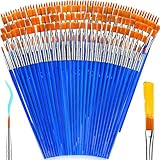
- 【162-Piece Bulk Set | Dual Brush System】Maximize versatility with 81 flat brushes (0.59 inch edge for bold strokes) and 81 round brushes (0.39 inch tips for details) – 3X more tools than standard kits! Pre-sorted in labeled compartments for instant access during painting sessions. Ideal for art classrooms, mural projects, and multi-artist households.
- 【Pro-Grade Durability | Zero Shedding Guarantee】 "Engineered with triple-crimped nylon bristles (43% higher resilience vs. standard) and aerospace aluminum ferrules tested for 10,000+ flex cycles. Lab-verified 0.01% shedding rate even with heavy impasto techniques – outperforms flimsy bristles in budget brushes."
- 【Multi-Scenario Readiness | Event & Daily Use】 Optimized for: Thanksgiving/Christmas face designs classroom projects ceramic decorating fabric printing and model painting; Lightweight plastic handles each reduce hand fatigue during prolonged sessions
- 【Effortless Maintenance | Long-Term Durability】 Clean with warm soapy water in 10 seconds; Reshape tips and air-dry vertically to preserve bristle integrity,After use, air-dry brushes thoroughly and store upright in the provided case to preserve bristle shape. The premium nylon filaments naturally regain their original form after each stroke. For cleaning, simply rinse in warm soapy water and gently reshape bristles with fingertips."
- 【Multiple Application】These acrylic paint brushes can be applied for most occasions,such as:watercolor,oil, gouache paint,face paint, acrylic paint, suitable for Thanks Giving Day, Christimas, Halloween face and body painting, canvas painting, fabric, rock, miniature, model, ceramics, arts and crafts painting, etc.
Those questions also explain why the conference called the subject “engineered transparency.” The goal was not simply to make glass disappear. It was to understand how a material’s visual effects, structural role, environmental performance, and practical limitations interact—and to recognize that a gain in one area may require a compromise elsewhere.
Where can readers find more on the conference’s subject?
For a longer treatment of glass’s technical, visual, and spatial effects, Columbia GSAPP’s catalog lists Engineered Transparency: The Technical, Visual, and Spatial Effects of Glass, edited by Michael Bell and Jeannie Kim. The 272-page hardcover was published in 2009 by Columbia GSAPP and Princeton Architectural Press, and includes SANAA’s Glass Pavilion. The Columbia GSAPP catalog entry describes the book; current retail availability is not established here.
The book is an optional extension for readers interested in the technical, visual, and spatial questions that framed the conference. Its catalog listing gives its format, length, editors, publishers, and connection to the pavilion; it does not make the book a requirement for understanding the event, nor does it establish current availability through a retailer.
Frequently Asked Questions
Who gave the keynote at Engineered Transparency?
SANAA principal Kazuyo Sejima gave the keynote on September 26, 2007. The main conference sessions followed on September 27 and 28.
What does “infrathin” mean in the Glass Pavilion discussion?
Nordenson used the term, borrowed from Marcel Duchamp, for a structural presence that seems to disappear. In this context, it describes the pavilion’s visual effect rather than a claim that the building lacks structural support.
Why did the Glass Pavilion need curtains?
Transsolar environmental consultant Matthias Schuler said curtains were needed to shield the museum’s glass art collection from ultraviolet light. Architectural Record reported that it took nearly a year to persuade Sejima that they were necessary.
Quick wins for a faster PC:
Clear out junk files and repair common Windows errorsFree Scan →Fix the driver behind crashes, sound loss and screen glitchesFind Drivers →Repair Windows errors before they cause bigger problemsFix Now →Do coatings improve glass performance without drawbacks?
The conference report describes trade-offs rather than a universally best treatment. Graham Dodd said many coatings used to improve thermal performance can hinder recycling, while Robert Heintges said frits and coatings can make glass appear less transparent. The report gives no product-specific comparison or quantified results.
Did the conference establish which glass system is best?
No. The report discusses competing objectives—including transparency, thermal performance, recycling, structural demands, safety, and climate control—but offers no comparative test results, product specifications, or universal recommendation.
The Bottom Line
The 2007 conference treated glass not as a single-purpose transparent surface but as a material shaped by competing design goals. SANAA’s Glass Pavilion made those tensions visible: its apparent lightness depended on engineering, its collection needed UV protection, and coatings or frits could complicate transparency or recycling. The report offers no universal solution, but a lasting design lesson: evaluate visual ambition alongside structural, environmental, safety, and end-of-life concerns.
Quick Recap


