Recommended Free Tools
Windows Errors? Fix Them Before They Spread
Free scan · no reinstall
Crashes, No Sound, or Screen Glitches?
What’s actually slowing this PC down?
Pick the symptom - the matching free tool is one click away.
Free scan · under a minute
PC Slower Than It Used to Be?
Free scan · Windows 10 & 11
ThatPainter is reader-supported. When you buy through links on our site, we may earn an affiliate commission. Learn More
If paint looks different on your wall than it did on a swatch, do not repaint immediately. A swatch is a small reference, while a wall is a large, textured surface viewed in changing daylight and artificial light, surrounded by floors, furniture, trim and other colors. Sheen, wall preparation and the paint’s drying stage also alter the appearance. Let the coat dry for the product’s stated time, inspect it from several parts of the room and under the lighting you normally use, then decide whether the issue is color, finish or application. If the color still fails after those checks, test a new physical sample on the wall before buying enough paint for a full repaint.
As an Amazon Associate I earn from qualifying purchases.
Quick wins for a faster PC:
Repair Windows errors before they cause bigger problemsFix Now →Scan for outdated or missing drivers - takes under a minuteDriver Scan →Why does paint look different on the wall than on the swatch?
The mismatch is usually caused by the viewing conditions and surface, not by a defective tint. Sherwin-Williams summarizes the principle as “Color never stands alone”: the same formula can appear warmer, cooler, lighter, darker or more saturated as its surroundings change.
Daylight changes by direction and time
Morning light can read warmer, direct midday light can look cooler or more washed out, and late-afternoon light can add a warm or reddish cast, according to Sherwin-Williams. A north-, east- or west-facing room therefore presents the same paint differently. A wall opposite a window may receive direct light while another wall remains in shadow, so the color can appear inconsistent even when the paint is identical.
Popular on Amazon
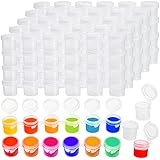
- Value Package: You will get 100 strips empty paint pots, 6 pots for each strip, totally 600 pots in this package for you, each pot is about 5 ml/ 0.17 ounces in capacity, sufficient quantity can satisfy your diversified needs.
- Good Sealing: Each mini paint storage cup is equipped with a lid, which can be tightly closed and easy to open, no more worrying about the leakage of paint; Ideal for keeping small amounts of paint fresh while you are working on a project.
- Convenient and Durable: ZEAYEA paint containers are made of high-quality plastic material, durable and lightweight, not easy to break. They are easy to store and portable to carry around when going out, and clear for easily distinguishing the color when using.
- Widely Use: You can apply these paint pots strips in different ways, such as the storage of painting pigments, cosmetics, lip gloss, glitter powder, beads, powder, etc. You can use them for schools, families, painting classes, art festivals and other occasions.
- Small and Practical: You can cut down the paint storage pots according to your needs, the individual pots will satisfy your different painting needs, that is perfect practical painting assistants in arts and crafts creation.
Light bulbs alter undertones
Warm bulbs can push a color toward yellow, red or beige. Cooler white bulbs can make some blues, greens and grays look sharper or colder. Compare the wall with the lamps and ceiling fixtures that are normally used in the room, not only with daylight. Tikkurila advises choosing color under lighting conditions similar to the place where it will be used.
Surrounding colors become part of the perception
Paint is judged in context. Wood floors, upholstery, curtains, artwork, trim and adjacent walls can reflect color onto the painted surface or make its undertone more noticeable. A neutral may look pinker beside a greenish gray, yellower beside a blue, or cooler beside warm wood. Moving furniture into the room can therefore change your impression without changing the paint.
Sheen changes reflected light
Gloss and sheen control how much light is reflected and in which direction. A glossy wall can look brighter from one angle and darker from another, while highlights can exaggerate streaks or surface defects. Two products with the same color name can look different if their finishes differ. A matte sample is not a reliable preview of a satin or semi-gloss wall.
Wall condition and substrate affect the result
Smoothness, porosity, the previous color, repairs and primer all influence how evenly the coating reflects light. Joint compound or filled holes may absorb paint differently from the surrounding drywall. A sample painted on paper, cardboard or a board with a different primer is not a perfect substitute for the actual wall.
Also popular on Amazon

- 🎨【Special Value Pack】 Our acrylic paint pot set comes with 40 strips of empty paint pots,6 pots for each strip. Totally 240 pieces of paint pots that will meet your daily painting, craft project use needs.
- 🎨【Convenient & Durable】 Our paint containers with lids are made of high-quality plastic material, durable and lightweight, not easy to break. These empty paint strips are high transparency and help you to easily distinguish the color when using it.
- 🎨【Good Sealing Paint Container】 The paint pot is equipped with a lid, which can be closed tightly by lightly pressing after use, avoiding messing up, opening and closing carefully to ensure proper sealing, ideal for keeping a small amount of paint fresh
- 🎨【Mini Paint Pots】 The capacity of each paint pot with lids is 3 ml. These paint pot strips are lightweight and takes up little space, easy to store and convenient to carry around when going out or traveling.
- 🎨【Wide Application】 This mini paint pots strips can contain a variety of items, such as painting pigments, cosmetics, glitter powder, jewelry beads, powder and so on. These paint pods empty bulk also can be applied to arts and crafts projects, schools, outdoor sketching, art class and art festivals.
Wet paint is not the final color
Fresh paint may look uneven, darker, glossier or patchier while moisture is leaving the film. Temperature, humidity, ventilation and the underlying surface affect how it settles. Asian Paints advises waiting at least four to six hours before checking a sample; full curing can take longer, depending on the product and conditions. Use the product label as the controlling instruction.
Screens and printed cards have built-in limits
Online color depends on screen brightness, calibration and image rendering. Printed cards and small chips cannot show how a color will interact with an entire room. Use them to narrow your choices, then confirm with real paint on the wall.
What should I do before deciding to repaint?
Follow the checks in this order. Each one removes a common source of false alarm before you spend money on another full coat.
- Stop and let the paint dry. Wait at least the interval stated for the product; four to six hours is the sample-check guidance cited by Asian Paints. Do not judge final color while the film is visibly wet. If the label specifies a longer recoat or cure period, follow that instead.
- View the wall through a complete lighting cycle. Check morning, midday and evening daylight. Then turn on the lamps and ceiling fixtures used at night. Write down whether the problem is warmth, coolness, darkness, brightness, glare or unevenness rather than relying on one quick impression.
- Inspect more than one wall. Compare the window wall, a shadowed wall and a wall near a lamp. Sherwin-Williams recommends observing a painted section through the day, and Rodda-Miller recommends testing multiple walls because orientation and reflected light differ.
- Confirm the product and sheen. Check that the sample and the planned paint are from the same product line and have the same finish. If the finished wall is glossier than the swatch, angle-dependent reflections may explain most of the mismatch.
- Restore the room’s context. Place representative flooring, curtains, furniture or artwork near the test area. A color that looked balanced against a white card may shift when surrounded by warm oak or colored upholstery.
- Use a neutral reference for whites and near-whites. Hold a clean white sheet or another known neutral beside the sample under the room’s actual lighting. This can reveal yellow, pink, green or blue undertones that are difficult to see in isolation.
- Separate color from application. Look for lap marks, flashing, patchiness, visible roller texture or different sheen over repairs. Those signs point toward preparation, porosity or application rather than the tint itself.
- Choose the correction only after the diagnosis. Keep the color if it works under the room’s normal conditions. Change bulbs or surrounding décor if they are driving the appearance. If the color itself still fails, buy a new physical sample and test again before repainting the whole room.
How large should a test sample be?
A generous test area gives your eyes enough surface to judge undertones and light changes. Asian Paints recommends a 2 ft × 2 ft sample area, and Benjamin Moore describes eight-ounce actual-paint samples as covering approximately 2 ft × 2 ft. Paint the same product line and sheen planned for the room, and place samples where they will experience both direct and indirect light.
Also popular on Amazon

- Rich combination: What you receive the package comes with 6 pieces strips of empty paint cup pots in this package, 6 pots for each strip, totally 36 pots in 1 package for you, each pot is about 5 ml/ 0.17 ounces in capacity, sufficient quantity can satisfy your diversified needs
- Nice sealing: The lid of the empty paint can is firmly fixed on the container, which is very suitable for tightening and sealing to avoid leakage every time it is used and keep the paint clean or any materials that will be stored.no need to worry of mess the empty pot will take care of it
- Convenient to carry: Made of polyethylene material, these clear paint strips are with proper thickness and high transparency, compact in size and light in weight, easy to store and portable to carry around when going out,outdoor and crafts are best combination
- Wide usage: You can use mini empty paint cups in a variety of ways, which can be widely used to storage of paints, paints, lotions, lip gloss, glitter powder, beads, powder and handicraft supplies in schools, homes, painting classes, art Festival etc
- Great gift: The mini empty paint can set is light, compact and airtight, easy to keep fresh, carry and store, and can be stored in a school bag or backpack. It is a good gift for children, students, painters, family members and friends
Do not rely on a narrow stripe hidden behind furniture. A small patch can look different simply because it is surrounded by the old color. If you cannot paint the wall, use a movable board, but compare it against the wall’s texture and existing color because the board’s substrate and primer may reflect light differently.
Which type of paint sample is most useful?
| Sample method | Best use | Limit to remember |
|---|---|---|
| Interior paint sample pot | Most direct prediction of the finished wall; apply roughly a 2 ft × 2 ft area with the intended product and sheen. | Still needs drying time and representative wall preparation. |
| Peel-and-stick sample | Renters or anyone who needs to move a test around several walls without painting. | It is a context aid, not a guarantee of the final sheen, texture or substrate result. Benjamin Moore notes that applied paint can vary from these samples because product, sheen and lighting differ. |
| Painted sample board or primed foam board | Comparing several colors in different parts of the room when direct wall painting is impractical. | The board’s surface and primer may not match the finished wall, so treat the result as directional. |
| Primer and repaint supplies | Correcting coverage, porosity, repairs or a strongly contrasting previous color after diagnosis. | There is no universal primer or repaint product for every wall; match the remedy to the surface problem. |
How can I tell whether the problem is color, sheen or wall preparation?
Use the symptom as a starting point rather than assuming every mismatch requires a new color.
| What you observe | Likely cause | First action |
|---|---|---|
| Looks right in daylight but wrong at night | Bulb color or fixture direction | Check the room’s bulbs and reassess before repainting. |
| Changes dramatically from morning to evening | Room orientation and changing daylight | Observe a full day and compare multiple walls. |
| Looks shiny, streaky or different by viewing angle | Sheen, gloss or an uneven surface | Confirm the finish and inspect preparation. |
| Looks different only over patched areas | Porosity, primer or substrate variation | Recheck preparation and test over representative repaired areas. |
| Looks wrong immediately after rolling | Wet film or uneven drying | Wait for the recommended dry and cure period. |
| Looks different from a phone or website image | Screen settings and image rendering | Use a physical card and an actual wall sample. |
Should I change the bulbs or the paint?
Change the lighting first when the color works in daylight but fails only under artificial light. Check the bulbs in the fixtures that matter most, including lamps used for reading and the main ceiling light, then reassess the dried sample. A bulb change can alter the room’s color balance without requiring another coat.
If the color looks wrong under both daylight and the room’s normal bulbs, lighting is less likely to be the sole cause. Compare it with a neutral reference, confirm the sheen and inspect the surface. Only after those checks should you test a different color.
Also popular on Amazon

- Massive capacity, great value: The acrylic paint can set we carefully prepared for you contains a full 100 empty paint pot strips, each of which contains 6 independent paint cup, totaling up to 600 empty paint pots with lids! Such a rich configuration can meet your daily painting practice or cope with various craft projects, so you can fully express your creativity without worrying about insufficient paint cans
- High-quality material selection, sturdy and durable: Our small paint containers with lids are carefully made of superior plastic materials, which are both durable and lightweight, and not easy to break, making you more assured to use. These paint cups with lids for painting have excellent transparency, you can easily identify the color of the paint inside through the can body, avoid confusion, and improve your use efficiency
- Sealed, keep fresh: Each small paint cups is equipped with a tight-fitting lid. After use, just press lightly to achieve a tight closure, effectively preventing the paint from spilling and staining other items. At the same time, we recommend that you be gentle when opening and closing to ensure the best sealing effect. This excellent sealing is especially suitable for storing small amounts of paint that need to be kept fresh
- Mini size, convenient to carry: Each paint pots with lids has a capacity of 3 ml, exquisite design and small size. These empty paint pots are not only lightweight, but also take up very little space, which is extremely convenient for storage and carrying. Especially suitable for use when you are out sketching or traveling, so that you can easily create anytime, anywhere
- Wide range of uses, unlimited creativity: This mini acrylic paint set is versatile. paint container can not only hold a variety of painting pigments, but also can be used to store cosmetics, glitter, jewelry beads, powders and many other items. These paint pods with lids are also ideal for art and craft projects, whether it is school teaching, outdoor sketching, art class or art festival activities, they can come in handy to help you unleash unlimited creativity
When is repainting justified?
Repaint when a dried, correctly applied sample still produces an unwanted undertone or value under the lighting and furnishings that will remain in the room. Before committing, test the replacement color on the same walls and over the same repairs. If the issue is uneven coverage or flashing, correct preparation and application rather than selecting a new tint.
A practical decision rule is:
- Keep the color: it looks acceptable in the room’s normal daylight and artificial light, even if it changes somewhat during the day.
- Adjust the room: the color works in one lighting condition but not another, and bulbs or nearby furnishings are the main trigger.
- Correct the surface: the mismatch follows patches, porous areas, lap marks or sheen changes.
- Retest a new color: the dried sample remains wrong after lighting, context, product and surface checks.
How can I avoid the same surprise on the next project?
Start with physical samples rather than choosing from a screen alone. Use the exact product line and sheen, paint a sample large enough to read, and place it on more than one wall. Keep the room’s normal lamps and representative furnishings in place while you observe the sample from morning through evening. Record the conditions that make the color look best and worst, then make the final choice based on the conditions that will dominate everyday use.
The Tool Desk
Outbyte PC Repair FREERepair Windows errors before they cause bigger problemsFix Now →Outbyte Driver Updater FREEFix the driver behind crashes, sound loss and screen glitchesFind Drivers →Remember that a color shift during the day is not automatically a failure. The goal is a finish that works across the room’s normal range of light, angle and context, not a shade that looks identical at every hour.
Frequently Asked Questions
How long should I wait before judging a newly painted wall?
Wait at least the product’s stated drying interval; the cited sample guidance is four to six hours. Full curing may take longer, especially with unfavorable temperature, humidity or ventilation, so use the label rather than a universal deadline.
Also popular on Amazon

- 120-Piece Bulk Set: 120 paint pots(20 strips x 6 pots) provide art storage containersfor all needs. Each 3ml paint pots with lids holds 0.1oz pigments-sufficient for classrooms or professional studios
- Leak-Resistant Sealing: Snap-lock paint containersfeature secure lids preventing spills. Leak-resistant acrylic paint storage maintain pigment freshness-open/close smoothly for mess-free painting sessions
- Durable Polyethylene Material: Unbreakable mini storage containersmade of BPA-free polyethylene.Crystal-clear paint containersresist stains/cracks while weighing 0.1oz each- portable for outdoor painting
- Multi-Use Organizers: Versatile paint containers store glitter/beads. Artist supply potssuit schools, festivals, or home studios-ideal for acrylics, oils, or resin pigments
- Perfect Gift: Paint pot stripsmake thoughtful Christmas gifts for painters, family members and friends. Shared crafting containersenable collaborative projects-ideal for creative sessions
Can a peel-and-stick sample predict the final paint exactly?
No. It is useful for moving a color around the room and judging context, but its material, sheen and adhesion differ from applied paint. Benjamin Moore specifically notes that applied paint can vary from peel-and-stick samples.
Why do two walls painted from the same can look different?
They may receive different daylight, bulb reflections and viewing angles, or have different porosity and repair history. Compare the walls at several times and inspect whether the apparent difference follows a patch or surface change.
Free tools Windows power users keep installed
One-click scans. No signup required.
How do I identify an undertone in white paint?
Place the dried sample beside a clean white sheet or another known neutral under the room’s actual lighting. The contrast can make yellow, pink, green or blue undertones easier to see than viewing the sample alone.
Quick Recap


