Free tools Windows power users keep installed
One-click scans. No signup required.
ThatPainter is reader-supported. When you buy through links on our site, we may earn an affiliate commission. Learn More
Specify paint against two separate tests: its regulated VOC content and its indoor-emissions performance. Start with the project’s geography and exact coating category, then apply the current authority-having-jurisdiction limit using that rule’s calculation basis. A product marketed as low-VOC or zero-VOC is not, by itself, proof of compliance. The submittal should identify the product and formulation, show VOC content on the required basis after tinting, thinning and mixing, and provide an emissions report when the project requires LEED, Indoor airPLUS or another indoor-air standard.
As an Amazon Associate I earn from qualifying purchases.
What VOC limit should paint meet?
The applicable limit is the one adopted by the authority having jurisdiction for the location and coating category, not a generic number printed in a marketing brochure. Confirm the rule edition and effective date before approving a specification because limits, exemptions and category definitions can change.
The Tool Desk
Outbyte Driver Updater FREEFix the driver behind crashes, sound loss and screen glitchesFind Drivers →Outbyte PC Repair FREEClear out junk files and repair common Windows errorsFree Scan →Begin with the jurisdiction
For a project in the South Coast Air Quality Management District, Rule 1113 governs architectural coatings. The district says suppliers, sellers and manufacturers placing coatings into that jurisdiction must comply. Other California districts may adopt the California Air Resources Board’s 2020 Suggested Control Measure (SCM), while projects elsewhere may fall under local rules implementing the national architectural-coatings requirements.
Popular on Amazon

- Use for a variety of indoor and outdoor project surfaces including wood, metal, plaster, masonry or unglazed ceramic
- Water-based acrylic formula is low odor, resist chips and provides long-lasting protection
- Covers up to 120 sq ft and dries to touch in 30 minutes for quick project completion
- Semi-gloss finish minimizes surface imperfections, goes on smoothly and provides excellent hide
- Prior to application sand surfaces with 180/200 grit sandpaper, then wash with a degreaser, allow the surface to dry and apply paint
The U.S. Environmental Protection Agency’s national architectural-coatings rule addresses VOC emissions that contribute to ozone nonattainment. EPA estimated reductions of 103,000 megagrams per year, or 113,500 tons per year, in its 1998 final rule. That national context does not replace a local limit when a state or air district has a more specific requirement.
Then identify the coating category
Do not classify a product only by its brand name or intended room. A floor coating, primer, interior stain and clear wood finish can have different limits even when all are used inside a building. Match the substrate, sheen, resin system and use statement to the rule’s defined category, and document any exemption or special provision.
What are representative South Coast AQMD Rule 1113 limits?
The following representative limits are expressed in grams of VOC per liter of coating, less water and exempt compounds. They are a specification aid, not a substitute for checking the current rule text and the product’s exact category.
Recommended Free Tools
| Coating category | Representative limit | Calculation basis |
|---|---|---|
| Flat coatings | 50 g/L | Less water and exempt compounds |
| Nonflat coatings | 50 g/L | Less water and exempt compounds |
| Floor coatings | 50 g/L | Less water and exempt compounds |
| Primers, sealers and undercoaters | 100 g/L | Less water and exempt compounds |
| Rust-preventative coatings | 100 g/L | Less water and exempt compounds |
| Interior stains | 250 g/L | Less water and exempt compounds |
| Wood coatings, varnish, sanding sealers and lacquer | 275 g/L | Less water and exempt compounds |
Before issuing a specification, verify whether the product is sold into the district, which subcategory applies, whether the stated limit is current, and whether a rule exemption changes the calculation. A value that appears below a table limit can still be unusable if it was calculated on the wrong basis or for a different product configuration.
What is the difference between VOC regulatory and VOC actual?
California Air Resources Board materials distinguish two values. VOC regulatory is calculated less water and exempt compounds; VOC actual includes water and exempt compounds. A submittal must label which value it reports and use the value required by the governing rule.
Confusing the two numbers can make a compliant product look noncompliant or, more seriously, make an as-applied product appear compliant when it is not. Require the data sheet or laboratory report to state units, density or volume assumptions where relevant, and the formula used. If a manufacturer supplies only one unlabeled VOC number, request clarification before approval.
Also popular on Amazon
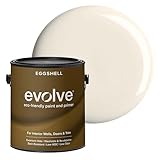
- PAINT + PRIMER IN ONE: Evolve’s paint-and-primer formula helps you get great coverage from the start, sealing your surface and reducing the extra work of multiple coats.
- AVAILABLE IN MULTIPLE SHEENS, COLORS & SIZES: Choose from a curated palette of designer colors in Flat, Eggshell, Satin, and Semi-Gloss sheens to match any style, room, or project. Available in 1-Gallons & 5-Gallons.
- EGGSHELL SHEEN – Soft, Velvety Glow: Offers a gentle sheen that balances elegance with durability. Ideal for moderate-traffic areas like dining rooms, hallways, and family rooms. Easy to clean without compromising the finish.
- STAIN & SCRUB RESISTANT: Built to last in real spaces, Evolve helps resist marks, scuffs, and water spotting, so your home continues to look polished and well-maintained.
- DESIGNED FOR MOISTURE-PRONE AREAS: Formulated to perform well in bathrooms, kitchens, entryways, laundry rooms, and other high-humidity spaces.
What documents should a paint submittal contain?
A defensible submittal connects one exact product and color to one jurisdictional limit and one emissions claim. Request the following items as a single package.
- Product identity: manufacturer, product name and SKU, data-sheet revision date, sheen, substrate and intended use.
- Regulatory scope: project jurisdiction, governing rule edition, coating category, exact limit and any exemption relied upon.
- VOC content: measured or calculated value, units and calculation basis, explicitly stating whether it is less water and exempt compounds or another required basis.
- As-applied assumptions: confirmation of maximum manufacturer-recommended thinning, all mixed or catalyzed components and VOCs generated during curing where the rule requires those factors.
- Colorant information: tinting system and colorant identity, VOC contribution and evidence that the final tinted product remains within the applicable limit.
- Method evidence: test method or formulation calculation, laboratory report when testing is required, and the product configuration tested.
- Indoor-emissions report: CDPH Standard Method v1.2-2017 or an accepted alternative, with exposure scenario, wet-applied mass per area, chamber duration and reported total-VOC range.
- Accreditation: ISO/IEC 17025 accreditation for the testing laboratory and, when a certification organization validates the claim, ISO Guide 17065 accreditation.
- Project certificates: manufacturer compliance statement and any certificate required by LEED, Indoor airPLUS, Green Seal or the contract documents.
- Safety documents: current safety data sheet and technical data sheet for hazards, handling, ventilation and cleanup. These support safe installation but do not replace VOC-content or emissions evidence.
Keep the revision date and SKU with every document. A report for an earlier formulation, a base paint without the selected colorant or a different sheen does not automatically substantiate the product being delivered.
How do VOC-content rules treat thinning, mixing and curing?
Use the product exactly as the rule and manufacturer define it. The CARB 2020 SCM identifies EPA Method 24 as the reference method and addresses thinning, multi-component products and VOCs generated during curing. That means the can’s as-supplied value may not be the only value that matters.
Thinning
If the technical data sheet permits water or solvent addition, record the maximum recommended amount and determine whether the jurisdiction requires the VOC calculation at that condition. Do not approve a concentration based on an unthinned laboratory sample when the installer is instructed to thin the material.
Two-component and catalyzed products
For epoxies, urethanes and other multi-component systems, identify every component and the specified mix ratio. The evidence should explain whether the reported VOC includes the complete kit after mixing rather than only the resin or only the hardener.
Quick wins for a faster PC:
Repair Windows errors before they cause bigger problemsFix Now →Scan for outdated or missing drivers - takes under a minuteDriver Scan →Clear out junk files and repair common Windows errorsFree Scan →Curing-generated VOCs
Some rules account for VOCs generated during curing. Ask the manufacturer or laboratory to state whether that contribution was included and which method or calculation supports it. A generic statement that the coating is water-based does not answer this question.
Also popular on Amazon
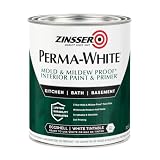
- Self-Priming formula - requires no sanding
- Mold & Mildew-Proof paint film - guaranteed for 5 years
- Resists dirt and moisture on film coating
- Finish is washable and scrubbable with soap and water
- Product contains a mildewcide to prevent the growth of mold and mildew on the paint film only
Do colorants change VOC compliance?
Yes. Colorants can add VOCs, and the final tinted product may have a different result from the untinted base. Require the tint system, colorant product identity and contribution to be documented for the actual color range being specified.
Rule 1113 and the CARB SCM address colorant treatment, and the draft EPA Indoor airPLUS Version 2 requirement expressly includes colorants in its content check. If a manufacturer provides a base-paint value only, obtain written confirmation that the approved tinting system and darkest colors remain within the limit.
Is low-VOC paint enough for LEED or Indoor airPLUS?
No. Content and emissions are separate compliance gates. A coating can meet a grams-per-liter limit yet fail an emissions test, or pass an emissions test while lacking the content evidence required by the rating system.
The Tool Desk
Outbyte PC Repair FREEClear out junk files and repair common Windows errorsFree Scan →Outbyte Driver Updater FREEScan for outdated or missing drivers - takes under a minuteDriver Scan →LEED v4.1
LEED v4.1 requires at least 75% of paints and coatings to pass its emissions evaluation and 100% to pass its content evaluation. For the CDPH option, testing uses CDPH Standard Method v1.2-2017. The report must identify the exposure scenario and provide the total-VOC range after 14 days: 0.5 mg/m3 or less, between 0.5 and 5 mg/m3, or 5 mg/m3 or more.
LEED specifies the classroom scenario for products used in classrooms and the default private-office scenario for other spaces. The statement of product compliance must include the scenario or scenarios used; a report that omits this information is incomplete.
LEED also permits an EN 16516 route. That route requires AgBB LCI compliance, a formaldehyde result of 10 micrograms per cubic meter or less, and a 28-day TVOC range. Confirm which route the project’s LEED version and credit language accept before ordering a test.
Also popular on Amazon

- PAINT + PRIMER IN ONE: Evolve’s paint-and-primer formula helps you get great coverage from the start, sealing your surface and reducing the extra work of multiple coats.
- AVAILABLE IN MULTIPLE SHEENS, COLORS & SIZES: Choose from a curated palette of designer colors in Flat, Eggshell, Satin, and Semi-Gloss sheens to match any style, room, or project. Available in 1-Gallons & 5-Gallons.
- EGGSHELL SHEEN – Soft, Velvety Glow: Offers a gentle sheen that balances elegance with durability. Ideal for moderate-traffic areas like dining rooms, hallways, and family rooms. Easy to clean without compromising the finish.
- STAIN & SCRUB RESISTANT: Built to last in real spaces, Evolve helps resist marks, scuffs, and water spotting, so your home continues to look polished and well-maintained.
- DESIGNED FOR MOISTURE-PRONE AREAS: Formulated to perform well in bathrooms, kitchens, entryways, laundry rooms, and other high-humidity spaces.
EPA Indoor airPLUS Version 2 draft
The draft specification requires site-applied paints to meet CDPH Standard Method v1.2-2017 emissions limits plus either SCAQMD Rule 1113 or CARB SCM content limits, including colorants. EPA describes indoor-VOC evaluation as complex and evolving and says it has not established universal threshold levels for indoor VOC concentrations or emissions for the covered product categories.
Outdated Drivers Are Slowing You Down
One free scan finds every outdated or missing driver and matches the right update for your exact hardware.Free scan · exact hardware matchWindows Errors? Fix Them Before They Spread
Repair common Windows errors and clear accumulated junk for a smoother, more stable PC - no reinstall needed.Free scan · no reinstallConsequently, phrases such as zero VOC, low odor or no added VOC are not substitutes for the named test method, exposure scenario and project-required certificates. Treat them as marketing descriptions until the underlying evidence is supplied.
How should two candidate paints be compared?
Compare candidates on the same basis and for the same final formulation. A simple matrix prevents a low number in one column from hiding a gap in another.
| Comparison axis | Question to answer |
|---|---|
| Jurisdiction and category | Is each product classified under the same local rule and coating category? |
| VOC limit and basis | Does the reported value use the required less-water/exempt-compound or other calculation basis? |
| As-supplied versus as-applied | Are thinning, tinting, mix ratio and curing assumptions included? |
| Emissions standard | Was the product tested to CDPH v1.2-2017 or an accepted EN 16516 route? |
| Exposure and duration | Does the report identify classroom or private-office exposure, chamber duration and TVOC range? |
| Formaldehyde | Where EN 16516 is used, is the result at or below 10 micrograms per cubic meter? |
| Laboratory and certification accreditation | Are ISO/IEC 17025 and, when applicable, ISO Guide 17065 credentials documented? |
| Performance | Does the coating meet substrate, sheen, washability, durability and coverage requirements? |
| Document currency | Do the report, SKU, colorant and formulation match the material being purchased? |
When a cell cannot be substantiated, mark it as not stated and request evidence rather than inferring equivalence from a similar product line.
Independent reader supportYour contribution helps us test, update, and keep practical guides available for everyone.What is a practical workflow for specifying compliant paint?
Use this sequence before the product is listed in the schedule or approved in a submittal.
Do these 3 things before closing this tab:
1Repair Windows errors before they cause bigger problems2Scan for outdated or missing drivers - takes under a minute3Clear out junk files and repair common Windows errors- Map the project: record address, air district, state program, building rating system and spaces such as classrooms or offices.
- Define the coating: identify substrate, interior or exterior use, sheen, primer or finish function and whether it is a floor, wood, stain or specialty coating.
- Pull the current limit: cite the rule edition, category, effective date and calculation basis; note any exemption or special condition.
- Request the formulation evidence: obtain VOC content, method, maximum thinning, component mix ratio and colorant information for the exact SKU.
- Check the final color: verify that the tint system and selected color do not invalidate the base-product value.
- Match the emissions path: select CDPH v1.2-2017 or an accepted EN 16516 route and confirm the correct exposure scenario and duration.
- Validate accreditation and certificates: check laboratory and certification-body credentials, then collect the project’s LEED, Indoor airPLUS or other required statement.
- Lock the approved configuration: identify the SKU, sheen, colorant, thinner and mix ratio in the schedule so substitutions trigger a new review.
What common documentation mistakes cause a rejection?
- Using an unlabeled VOC number: fix it by identifying whether the value is regulatory or actual and by stating units and formula.
- Checking the wrong category: fix it by matching the product’s technical use and substrate to the rule definition, not to a casual name such as interior paint.
- Relying on the untinted base: fix it by documenting the colorant and final tinted formulation.
- Ignoring application conditions: fix it by including permitted thinning, all components and curing-related VOCs where required.
- Submitting an emissions report without a scenario: fix it by obtaining the classroom or private-office designation and the wet-applied mass per area.
- Treating an SDS as compliance proof: fix it by adding the VOC calculation, test report and certificates; retain the SDS only for safety information.
- Using outdated evidence: fix it by matching report date, data-sheet revision, SKU and current rule edition before procurement.
Which certification can strengthen a paint specification?
Third-party certification can make review easier when it covers the exact product and current formulation, but it does not eliminate the need to check the local limit. Green Seal identifies GS-11 Edition 4.1 as its latest version, dated March 11, 2025, with corrections republished April 3, 2026. Ask for the certificate scope and verify that it covers the selected sheen, colorant and product identity.
Also popular on Amazon

- HIGH-TRAFFIC DURABILITY: Engineered to withstand heavy foot traffic, daily use, and repeated cleaning. This heavy-duty formula is ideal for porches, patios, basements, steps, and walkways where long-term wear resistance is required.
- SCUFF & SCRATCH RESISTANT: Our advanced coating creates a hard, resilient finish that resists marks, abrasions, and scuffing from shoes and furniture. Keep your floors looking clean and polished with a surface built to stay well-maintained longer.
- INTERIOR & EXTERIOR VERSATILITY: Provides reliable protection for both indoor and outdoor projects. This multi-surface paint offers excellent adhesion on wood, concrete, masonry, and previously painted surfaces, ensuring a consistent look across your home.
- WEATHER & MOISTURE BARRIER: Formulated to resist rain, humidity, and UV exposure. The moisture-resistant film helps prevent cracking, peeling, and fading, extending the life of your exterior porches and decks through variable weather conditions.
- SMOOTH, HIGH-HIDE COVERAGE: Achieve a professional, uniform finish with ease. Our high-hide formula effectively masks surface imperfections and provides even color distribution, reducing the need for multiple coats on properly prepped surfaces.
Accredited CDPH testing is also useful evidence for emissions claims. ISO/IEC 17025 addresses laboratory competence; ISO Guide 17065 applies when a certification organization validates conformity. Record those credentials in the submittal instead of relying on an unverified logo.
Frequently Asked Questions
Does zero-VOC paint have zero indoor emissions?
Not necessarily. A zero-VOC label may describe a particular content calculation or exclude colorants and curing reactions, while indoor emissions depend on the complete formulation and test conditions. Request the applicable chamber report and exposure scenario before treating the claim as an emissions result.
Which VOC number should appear in a project specification?
Use the value required by the governing jurisdiction and label its basis directly beside the number. In California materials, that usually means distinguishing VOC regulatory from VOC actual; provide both when reviewers could otherwise confuse them.
Can a safety data sheet prove that paint meets a VOC limit?
No. An SDS is written for hazard communication, handling and cleanup. It should accompany, but cannot replace, the product-specific VOC calculation or laboratory evidence and any required emissions or certification documents.
What should happen if the contractor proposes a different color or tint system?
Pause approval and recheck the final tinted formulation, content limit and emissions documentation. A substitution can change VOC content or invalidate a report even when the base paint and product name are unchanged.
Quick Recap

Product prices and availability are accurate as of the date/time indicated and are subject to change. Any price and availability information displayed on Amazon at the time of purchase will apply.

