What’s actually slowing this PC down?
PC Slower Than It Used to Be?
A free scan shows the junk files, broken settings and background clutter dragging Windows down - then fixes them in one click.Free scan · Windows 10 & 11Outdated Drivers Are Slowing You Down
One free scan finds every outdated or missing driver and matches the right update for your exact hardware.Free scan · exact hardware matchPick the symptom - the matching free tool is one click away.
ThatPainter is reader-supported. When you buy through links on our site, we may earn an affiliate commission. Learn More


As an Amazon Associate I earn from qualifying purchases.
Winnebago star quilts are both textile art and part of community life: documented uses include honoring leaders, welcoming service members home, marking births and remembering the dead. Their eight-pointed stars, makers and occasions carry particular stories; they should not be reduced to a decorative pattern or treated as representative of every Native community.
What do Winnebago star quilts represent?
In its 2013 account of Winnebago quiltmaking, American Patchwork & Quilting describes a star quilt as an eight-pointed star assembled from diamond-shaped pieces. The article connects star imagery to stars used on buffalo robes, then shows how a maker can give that imagery a specific local meaning.
#1 Best Overall
For the 2003 Little Priest Tribal College Library Quilt, Maria Scott made a 76-inch-square quilt for the college’s new library, completing it in time for the library’s 2004 opening. Its central image combines a single star with an appliquéd buffalo reading a book. The article identifies buffalo as a sacred clan and describes the buffalo in this work as a messenger. Those details explain this quilt’s story; they are not a universal interpretation of buffalo imagery or of every star quilt.
Why are quilts given as gifts?
The Winnebago examples show quilts doing social work as well as providing warmth. The 2013 article records quilts given to political and religious leaders, displayed at schools and a hospital, sent with service members and used to welcome them home, and made for newborns, funerals and memorials. It also describes quilts as household necessities and marketable goods. These are documented uses, not a fixed list of purposes every quilt must serve.
One example is the 2009 T.J. Smith memorial giveaway quilt, made in memory of a young man. Maria Scott designed and pieced the cotton quilt, measuring 100 by 90 inches; Patrice Blackhawk quilted it. The article also describes five quilts made for Smith’s funeral, including this memorial work. The individual roles matter: design, piecing and quilting can be shared across makers.
Do these 3 things before closing this tab:
1Scan for outdated or missing drivers - takes under a minute2Clear out junk files and repair common Windows errors3Fix the driver behind crashes, sound loss and screen glitchesRank #2
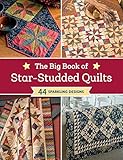
- Discover a dazzling array of quilts featuring Star blocks, a perennial favorite of quilters for generations
- Inspiration abounds with 44 stellar designs from a host of brilliant designers, including Betsy Chutchian, Kim Diehl, Barbara Groves, Mary Jacobson, Lynne Hagmeier, Nancy Mahoney, Sherri L
- McConnell, Jo Morton, and many more
- Add sparkle throughout the house with projects ranging from 12 in square to queen-size bed quilts and set your sights upon the stars
- See more in product description.
The Smithsonian National Museum of the American Indian places gift-giving and honor within a broader account of Native quilting. Its Quilt Along resource explains that quilts became a means of maintaining gift-giving and bestowing honor, and describes quilting as a vibrant tradition bridging generations. That wider account provides context, but it does not make the experience of all Native nations identical.
How did quilting take root amid displacement?
The 2013 Winnebago article links quiltmaking instruction to Euro-American missionaries and settlers in the 19th century, during a period when many Winnebago people were relocated west from Wisconsin between the 1840s and 1860s. The Smithsonian’s account situates missionary women’s quilting instruction within forced relocations and assimilation. Together, these accounts place quilting in colonial conditions rather than presenting it as a simple, voluntary transfer of craft.
At the same time, Native makers adapted materials and techniques, chose designs and put quilts to their own social and cultural purposes. The Smithsonian’s educational curriculum, written by Shawn Termin, a Lakota educator, observes: “Studying Native quilts gives students the opportunity to understand present-day Native American lives.” The point is not that one quilt can stand for all Native experience, but that quilts can make living histories and relationships visible.
How are star quilts and ribbonwork made?
Pieced star quilts
The Winnebago article describes the star pattern as many diamond-shaped pieces joined into an eight-pointed star. It documents a 2009 White Buffalo Quilt, 96 inches square, hand pieced and quilted by Velma Alaniz. The article identifies White Buffalo Woman as a powerful deity and messenger; that is the cultural description it supplies, not a basis for adding broader theological claims.
Recommended Free Tools
A separate baby quilt in the article was machine pieced and quilted by Patrice Blackhawk. These examples show different techniques and purposes, not a ranking of quality or a rule about how Winnebago quilts must be made.
Ribbonwork, or wawaje
Ribbonwork is related textile knowledge, but it is not the same technique as a pieced star quilt. The article describes wawaje as mirror-image appliqué used to embellish dance regalia, including skirts and purses. In its examples, flora and fauna motifs refer to wooded ancestral homelands, while individual designs may represent clan and family. These descriptions belong to the works discussed in the article and should not be turned into a universal definition of ribbonwork.
Rank #4

- Paperback
- Black and white pages
- Colored Photos on Cover
How are the stories passed between generations?
The article names makers including Maria Scott, Velma Alaniz, Patrice Blackhawk, Sharon Redhorn and Marguerite Johnson. It describes Alaniz offering a quilting class and Redhorn teaching her daughters needle skills along with stories she learned from her grandmother. Redhorn puts that inheritance simply: “I tell them the stories my grandma told me.”
Teaching is part of the practice, not an afterthought to the finished object. A quilt can hold a maker’s chosen design and occasion, while skills and stories move through family and community relationships.
Free tools Windows power users keep installed
One-click scans. No signup required.
Where can readers learn more?
The Smithsonian’s Quilt Along provides broader context on quilting in Native communities. Its educational curriculum, To Honor & Comfort: Native American Quilting Traditions, includes Shawn Termin’s teaching resource.
To Honor and Comfort: Native Quilting Traditions is also listed by the Museum of New Mexico Foundation Shops. Its description covers Winnebago ribbon quilts and Plains Indian star designs alongside other Native and Indigenous quilting traditions; it is not a Winnebago-only pattern manual.
The Winnebago examples in this article come from a June 14, 2013 feature. Its exhibition and powwow listings are historical, not current schedules. The sources cited here do not establish present-day classes, local quilt availability or current ways to purchase directly from Winnebago makers.
Quick Recap





