Free tools Windows power users keep installed
One-click scans. No signup required.
ThatPainter is reader-supported. When you buy through links on our site, we may earn an affiliate commission. Learn More
Art Deco interior design is a broad design language associated with the 1920s and 1930s, not a single decorating formula. To bring it into a contemporary home, choose a geometric or stylized focal point, pair it with a few considered materials or textiles, and keep other surfaces calm.
These 20 ideas translate Art Deco’s documented ornament and motifs into practical choices for walls, lighting, furniture, fabrics, and accessories. Treat current products and finishes as contemporary interpretations—not automatically as period-authentic antiques.
Art Deco in brief
Art Deco is strongly associated with the 1920s and 1930s and the 1925 decorative-arts exhibition in Paris. The National Galleries of Scotland describes its reach across architecture, furniture, ceramics, glass, clocks, jewellery, and two-dimensional works. The Victoria and Albert Museum’s account of Art Deco in the home offers a home-focused view, including furnishing fabrics and household design.
Do these 3 things before closing this tab:
1Repair Windows errors before they cause bigger problems2Fix the driver behind crashes, sound loss and screen glitches3Clear out junk files and repair common Windows errors#1 Best Overall

- 🏠DETAILS: Size 17.5 X276 Inch , total 33.5 sq.ft(44.5cmX7m), Self adhesive (no extra glue needed). Made of durable vinyl, Black and gold peel and stick wallpaper , Matte, Waterproof, Removable.
- 🏠DIY FREELY: Trimming gridlines on backing paper for precise measurements, cut to any sizes, self stick on any smooth walls or cabinets. Premium painting Ensures No Fading for Years.
- 🏠All-PURPOSE: Black and gold wall paper for bedroom, art deco peel and stick wallpaper for kitchen, abstract wallpaper for living room, peacock wallpaper for bathroom, art deco contact paper for cabinets drawers, self adhesive wallpaper for walls.
- 🏠REMOVABLE: Start in a corner of the sticky wallpaper, begin to peel the wallpaper away slowly and evenly(30 degree), if the wallpaper is strong bonded with your walls, please soft the wallpaper glue by hair-dryer to avoid it tear your wall paint.
- 🏠USE: Art deco wallpaper for bathroom, kitchen, bedroom, living room, cabinets, bar, dining room, accent wall, apartment, cubicle, laundry room, office, renters, wall covering, drawers, boys room, girls bedroom, appliances, mudroom, pantry, study room, rv, small bathroom, hallway, front room, powder room, entrance walls, dresser, nursery, furniture, island, restroom, family room, crafts, bookcase, foyer, design ideas, sunroom, kids room, interior walls, teen, stairway, teenager room, dorm.
The Metropolitan Museum of Art describes the 1925 Exposition as “a triumph of ornament in a variety of guises” and identifies human figures, animals, flowers, plants, and abstract geometry among recurring motifs. Its French Art Deco essay also describes crafted objects and the use of precious and unusual materials. These sources document a varied design language; they do not mean every Deco room used the same palette or level of luxury.
Walls and architectural details
1. Build around one geometric focal point
Choose a stepped, fan, or zigzag form for one focal element, such as a rug, wall treatment, furniture silhouette, or artwork. Museum accounts describe geometric patterns as part of Art Deco’s visual vocabulary. Keep the surrounding room comparatively quiet so the focal shape stands out.
2. Try a fan or sunburst motif
Translate ornamental geometry into one mirror, print, light, or textile detail. The Met documents recurring motifs in Art Deco, but a contemporary fan-shaped mirror or sunburst accessory is a modern interpretation, not proof of a period artifact. Avoid repeating the same motif everywhere.
3. Use patterned wallcovering selectively
Try geometric or stylized botanical wallpaper on one feature wall, in an alcove, or inside a bookcase. These are contemporary applications of documented motifs, not a claim that a particular current wallpaper is historically authentic.
What’s actually slowing this PC down?
Pick the symptom - the matching free tool is one click away.
For a rental or lower-commitment project, consider removable wallpaper. Before buying, measure the area and check the roll dimensions, pattern repeat, surface-preparation requirements, removability, and suitability for humidity. Test a sample if possible; results can depend on the existing paint and wall condition.
4. Frame a doorway or niche with stepped lines
Use paint, applied trim, contrasting panels, or wallpaper to give a doorway, niche, or built-in a clear border. Stepped lines can echo the geometric vocabulary described by the Philadelphia Museum of Art. Treat this as an adaptable design move rather than a feature found in every historical interior.
For a painted treatment, mark the edges carefully, use a level for horizontal lines, and check the contrast in the room’s actual lighting. A restrained border can be enough.
5. Add one reflective surface
A mirror or glass accent can support a polished, decorative composition. Consider a mirror above a console or a glass-topped side table, but treat a contemporary sunburst mirror as a modern styling choice rather than a period artifact.
The Tool Desk
Outbyte Driver Updater FREEScan for outdated or missing drivers - takes under a minuteDriver Scan →Outbyte PC Repair FREERepair Windows errors before they cause bigger problemsFix Now →Rank #2

- Premium Wallpaper Specifications & Material:This premium wallpaper measures 17.7×236 inches and is crafted from high-quality, self-adhesive vinyl with a smooth, wipeable finish. It features a pre-applied backing for glue-free installation, removes cleanly without damaging walls, and offers waterproof and stain-resistant properties—making it both luxurious and practical for dry interior spaces.
- Art Deco Luxury Wallpaper Design:Inspired by the glamour of the Art Deco era, this wallpaper showcases bold black and gold geometric patterns with sharp lines, symmetrical motifs, and metallic accents. Its sophisticated palette and structured design evoke a timeless, hotel-style elegance, transforming any room into a refined and visually striking space.
- Easy DIY Wallpaper Installation:No tools or professional skills are needed. Simply peel off the backing, align the wallpaper on your wall, and smooth it gently into place—the material allows for repositioning during application. It can be trimmed to fit accent walls, panels, or furniture, offering a high-end look with DIY convenience.
- Versatile Luxury Applications:Perfect for creating a feature wall in a living room, bedroom, or dressing area. Its upscale Art Deco aesthetic also suits entryways, home offices, and commercial spaces like boutiques or hotel-inspired interiors, adding a touch of curated sophistication wherever it’s placed.
- Durable & Easy-to-Maintain Wallpaper:Designed with a scratch-resistant and fade-resistant surface that stands up to everyday life in dry indoor settings. Light dust and smudges can be wiped clean with a damp cloth, preserving the sharp geometric details and rich gold accents for long-lasting luxury appeal.
Check the mirror’s scale against the furniture below, and use suitable wall anchors or structural support for its weight and wall type.
Lighting, color, textiles, and finishes
6. Choose a sculptural lamp
A lamp can provide useful lighting and act as a decorative focal object. The Met documents period Art Deco lamps; a current geometric, globe, or frosted-glass fixture is a contemporary choice unless its provenance is established.
Before buying, check dimensions, bulb base, maximum wattage, shade clearance, cord placement, and compatibility with local voltage and outlets. Hardwired fixtures should be installed in accordance with local electrical requirements by a qualified professional where necessary.
7. Introduce one dark or richly colored anchor
Use a deep wall, upholstered chair, or painted cabinet if it suits the room, then balance it with lighter surfaces. A dark or saturated accent is a styling option, not a universal Art Deco palette. Choose the color in relation to the room’s light and existing finishes.
Free tools Windows power users keep installed
One-click scans. No signup required.
8. Pair smooth finishes with tactile fabric
Contrast a polished, mirrored, or glassy accent with furnishing fabric to keep the room from feeling visually flat. The V&A’s account of the Art Deco home discusses furnishing fabrics; for a current room, choose a textile suited to the way it will be used.
Check cleanability, abrasion resistance, and fading risk before selecting upholstery or curtains. A durable contemporary fabric can be a practical choice without claiming period authenticity.
9. Use a geometric rug as the room’s pattern base
Choose a rug with a stepped border, diamonds, arcs, or another restrained geometric pattern. Tie its colors to the walls and upholstery, and let its scale set the room’s visual rhythm.
In a seating area, choose a rug large enough for at least the front legs of the principal seating to rest on it. In a dining room, size it so chairs remain on the rug when pulled out. If the walls already carry a strong pattern, choose a quieter rug.
Rank #3
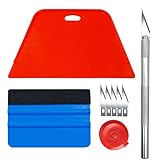
- Complete Tool Kit: Includes a large smoothing tool, blue squeegee, utility knife, replacement blades, and measuring tape for installation tasks.
- Smooth Application: The smoothing tools help reduce bubbles and creases during installation for a smoother surface and easier application.
- Cutting Tool: Includes a utility knife and replacement blades for cutting and trimming materials during installation.
- Smart Measuring Companion: Comes with measuring tape to plan layout and trim accurately before applying, minimizing waste for a perfect fit.
- DIY Installation: Designed as a basic tool set for vinyl backsplash tile installation and DIY home improvement projects.
10. Add a small metallic accent
A handle, frame, lamp detail, or tray can provide a restrained highlight. Museum sources document precious and unusual materials in high-style examples, but modern metal finishes are not equivalent to historical gold or platinum leaf. Use “gold-tone” or “metallic finish” when describing a contemporary product.
Furniture and decorative objects
11. Choose furniture with a clear silhouette
Select a chair, console, table, or headboard whose shape reads clearly, then give it room to stand out. Museum accounts document domestic furnishings and crafted furniture, but a contemporary piece need not imitate a specific historical design to complement the room.
Avoid crowding a statement piece with several competing objects. One strong silhouette can do more than a group of unrelated accents.
12. Make upholstery carry a motif
Use geometric or stylized fabric on one chair, cushion, or bench instead of covering every piece in a bold pattern. The V&A documents furnishing textiles in the Art Deco home, while the Met describes a variety of motifs. Treat the specific fabric you select as a present-day interpretation.
13. Bring in a stylized botanical print
Flowers and plants appear among the motifs described by the Met. For a graphic effect, choose simplified or stylized forms rather than a literal garden scene. One print, cushion, or textile can introduce the idea without filling the room with competing patterns.
14. Use glass to add lightness
A glass tabletop or decorative glass object can contrast with heavier furniture. Glass is among the media included in the National Galleries of Scotland’s account of Art Deco’s reach. Use a contemporary glass object as a practical material choice, not as a claim of historical authenticity.
15. Display one decorative object with a strong profile
Choose a vase, bowl, clock, or sculpture whose outline relates to the room’s geometry. The Met discusses decorative objects and sculpture in Art Deco contexts. Give the object negative space so its form can be appreciated.
Independent reader supportYour contribution helps us test, update, and keep practical guides available for everyone.Arrangement and material choices
16. Arrange objects around a focal point
For a formal effect, arrange matching or related objects on either side of a mirror, artwork, or fireplace. Symmetry is a useful compositional choice, not a requirement for every Art Deco room. Allow smaller objects or artwork to add variation.
Outdated Drivers Are Slowing You Down
One free scan finds every outdated or missing driver and matches the right update for your exact hardware.Free scan · exact hardware matchPC Slower Than It Used to Be?
A free scan shows the junk files, broken settings and background clutter dragging Windows down - then fixes them in one click.Free scan · Windows 10 & 11Rank #4

- EASY ADJUSTMENT - E-Z Hang provides ‘slip’ allowing you to float your wallpaper into position without having to peel and re-stick, simplifying pattern matching.
- DURABLE BOND - Provides improved adhesion for a long lasting, durable bond.
- SPRAY APPLICATION - No need for paint brushes and rollers with the simple spray application.
- ELIMINATE THE MESS - Clean excess adhesive using only water. Excellent for use with pre-pasted wallpapers, and eliminates the need for messy water trays.
- MADE IN ILLINOIS - Proudly made in Calumet City, Illinois.
17. Borrow a period material effect accessibly
High-style examples discussed by the Met used precious and unusual materials. If a rare or costly material is impractical, consider a responsible wood veneer or contemporary textured surface that suits your budget and upkeep needs. Describe the substitute as a modern alternative, not an equivalent historical material.
18. Repeat one shape or finish across a small group
Repeat a shape or finish in two or three places—for example, in a lamp, frame, and cabinet handle. The repetition helps the room feel deliberate without turning every object into a statement. This is a practical styling approach, not a museum-defined rule.
19. Adapt the scale to the room
In a compact room, use a motif on a cushion or artwork; in a larger room, consider a wall treatment or a prominent furniture silhouette. This is contemporary design advice: choose a scale that suits the room rather than treating a single size as historically correct.
20. Mix period references with present-day function
Combine one period object or reproduction-inspired piece with contemporary seating, lighting, storage, or everyday essentials. The documented range of Art Deco furnishings and household design offers a basis for drawing on different kinds of objects, but the exact mix is a personal choice. Keep the room comfortable and functional rather than trying to recreate a period set.
Quick wins for a faster PC:
Clear out junk files and repair common Windows errorsFree Scan →Scan for outdated or missing drivers - takes under a minuteDriver Scan →Repair Windows errors before they cause bigger problemsFix Now →How to combine the ideas
- Choose one anchor. Start with a geometric wall treatment, mirror, lamp, furniture silhouette, or rug.
- Select two supporting details. Repeat a related shape, material, or color elsewhere in the room.
- Keep the background quiet. Use simple flooring, restrained upholstery, or mostly unpatterned walls to give the focal elements room.
- Check scale and sightlines. In a compact room, a small motif in art or fabric may be easier to balance than several large patterns.
- Edit before adding more. If the room already has patterned wallpaper and a statement rug, another prominent pattern may weaken the composition.
Paint and installation checklist
- Test paint colors and finishes in the room, observing them in daylight and artificial light before committing.
- Keep large surfaces relatively calm when the main anchor is patterned wallpaper, vivid upholstery, or a bold furniture silhouette.
- For painted geometric borders, prepare the surface, establish level reference lines, and use tape appropriate for the existing finish.
- Before wallpapering, check that the wall is compatible with the product’s adhesive. Measure coverage and allow for pattern matching as directed by the manufacturer.
- Do not assume removable wallpaper suits every bathroom or high-humidity area. Follow the product’s surface and moisture guidance.
- Anchor mirrors, cabinets, shelves, and heavy artwork with hardware rated for their weight and wall type.
- Use code-compliant electrical work for hardwired lighting, and verify bulb type, heat clearance, dimmer compatibility, and local voltage requirements.
- Consider practical and ethical sourcing when choosing materials. Contemporary alternatives can suggest a texture or finish without using protected or problematic materials.
Common Art Deco decorating mistakes
- Reducing Deco to one palette: Gold and black are not the whole style; documented motifs include geometry, figures, animals, flowers, and plants.
- Assuming every room was equally luxurious: High-style examples used costly materials, but contemporary decorating does not require them or a full period recreation.
- Using every motif at once: Fans, zigzags, stepped lines, and stylized botanicals need a visual hierarchy.
- Calling every modern product authentic: “Art Deco-inspired” describes a contemporary interpretation; it does not establish age, provenance, or craftsmanship.
- Ignoring function and upkeep: Choose textiles, finishes, and lighting that suit how the room is used and maintained.
FAQ
What is Art Deco interior design?
Art Deco is a broad design language associated with the 1920s and 1930s. Museum sources describe its reach across objects and home design, with recurring geometric and stylized natural motifs. Its appearance varied; it is not a single recipe of colors or materials.
How do I decorate in Art Deco style?
Start with one geometric or sculptural focal point, such as a rug, lamp, artwork, or furniture silhouette. Repeat a related shape or finish in a small number of places, and keep other large surfaces calmer.
Can I use Art Deco ideas in a rental?
Yes. Consider movable furniture, textiles, artwork, or removable wallpaper. Check the wallpaper’s surface and humidity guidance, and test a sample: removability can depend on the existing paint and wall condition.
Do I need antique furniture for an Art Deco-inspired room?
No. You can combine a documented period piece or reproduction-inspired object with contemporary furniture and practical finishes. Describe modern items as inspired by the style unless their age and provenance are established.
Recommended Free Tools
The Bottom Line
To bring Art Deco character into a contemporary room, choose one clear anchor—geometric pattern, a sculptural lamp, a distinctive furniture silhouette, or a decorative object—and support it with a few related shapes or finishes. Keep the room functional, distinguish modern interpretations from historical objects, and let a deliberate focal point do more work than a crowded collection of accents.
Quick Recap

Product prices and availability are accurate as of the date/time indicated and are subject to change. Any price and availability information displayed on Amazon at the time of purchase will apply.




