What’s actually slowing this PC down?
Pick the symptom - the matching free tool is one click away.
ThatPainter is reader-supported. When you buy through links on our site, we may earn an affiliate commission. Learn More
As an Amazon Associate I earn from qualifying purchases.
To invert colors in Paint.NET, select the layer you want to change and choose Adjustments > Invert Colors. You can also press Ctrl + Shift + I. Paint.NET immediately creates a photographic-negative effect: black becomes white, white becomes black, and other colors shift to their opposites.
The command affects the active layer, and an active selection limits the change to that selected area. It does not automatically invert every layer in a multi-layer document.
#1 Best Overall
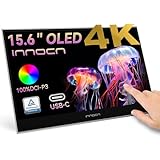
- 15.6" Portable Monitor - OLED Touch Monitor Second Touch Screen for Photo Editing with 4K, 100% DCI-P3, 100000:1, 10Bits, USB C External Monitor for Laptop,PC, Phone,Consoles
- Plug-and-play Dual Screen - No need for any driver installation, you need only connect this second display with the compatible port that can output video / audio signal ( USB Type-C and mini HDMI connection )
- 10-point Touch Secondary Monitor, tap, swipe and pinch to zoom, just like a tablet or touch-screen laptop. You definitely know portable touchscreen monitor can be more convenient faster than normal portable monitor.
- True Second Screen - secondary,mirror or span mode,you choose by your need; This separate screen works for camera,laptop,pc,smart phone,switch,xbox,ps3/4/5 and more
Invert the colors of an entire layer
- Open your image in Paint.NET.
- In the Layers window, click the layer containing the pixels you want to invert.
- If a selection is active, remove it with Ctrl + D if you want the whole layer affected.
- Open the Adjustments menu.
- Choose Invert Colors.
Paint.NET applies the adjustment immediately; there is no settings dialog or slider. The result is similar to a photographic negative. A full-color image remains full-color, but its color channels are reversed rather than converted into simple black and white. See the official Paint.NET Adjustments documentation.
If the wrong layer or region changed, use Edit > Undo or press Ctrl + Z.
Use the Invert Colors shortcut
With the correct layer active, press Ctrl + Shift + I. This performs the same operation as Adjustments > Invert Colors.
Outdated Drivers Are Slowing You Down
One free scan finds every outdated or missing driver and matches the right update for your exact hardware.Free scan · exact hardware matchPC Slower Than It Used to Be?
A free scan shows the junk files, broken settings and background clutter dragging Windows down - then fixes them in one click.Free scan · Windows 10 & 11| Command | What it changes | Shortcut | Typical use |
|---|---|---|---|
| Invert Colors | Pixel color values | Ctrl + Shift + I | Create a photographic negative or reverse colors |
| Invert Alpha | Opacity and transparency | Ctrl + Alt + I | Swap opaque and transparent areas |
| Invert Selection | The selection boundary | Ctrl + I | Select everything outside the current selection |
In particular, Ctrl + I does not invert the image colors. It inverts the current selection. The current shortcuts are listed in Paint.NET’s keyboard and mouse commands documentation.
Invert only part of an image
To invert a logo, object, face, background, or other region without changing the rest of the layer:
Rank #2

- 27” WQHD IPS Display for Creative Precision:27-inch WQHD (2560×1440) IPS panel delivers sharp detail and 178° wide viewing angles, offering more workspace and clarity for photo editing, video production, and design tasks.
- 100% sRGB & Rec.709 Color Accuracy:Factory calibrated and Calman Verified with ΔE<2 accuracy, ensuring precise and consistent color performance for professional content creators and designers.
- ASUS Eye Care Technology:Flicker-free and low blue light technologies reduce eye strain during extended use, making it ideal for professionals working long hours.
- Extensive Connectivity & USB Hub:Includes DisplayPort, HDMI, DVI, and USB hub for seamless connectivity with desktops, laptops, and creative workstations, improving workflow efficiency.
- Fully Ergonomic Design for Productivity:Adjustable stand with tilt, swivel, pivot, and height adjustment provides maximum comfort for long working sessions and multi-monitor setups.
- Choose a selection tool, such as Rectangle Select, Ellipse Select, Lasso Select, or Magic Wand.
- Select the region you want to change.
- Click the correct layer in the Layers window.
- Choose Adjustments > Invert Colors, or press Ctrl + Shift + I.
- When finished, remove the selection with Ctrl + D.
With a selection active, Paint.NET restricts the adjustment to that selected area. Pixels outside the selection remain unchanged. If you selected the background but want to invert the subject instead, use Ctrl + I to invert the selection before applying Invert Colors.
Invert a multi-layer image
Invert Colors applies to the active layer or active selection. Selecting one layer and running the command does not automatically change every layer in the document.
Free tools Windows power users keep installed
One-click scans. No signup required.
Choose the workflow that matches your goal:
- Keep layers editable: duplicate each relevant layer and invert the duplicates individually. This preserves the original layers and gives you separate control over each result.
- Invert the visible composite: create a merged copy of the visible image, then invert that copy. This treats the visible artwork as one image.
- Make a one-layer working version: duplicate the document, flatten the duplicate, and apply Invert Colors to the resulting layer.
Use a duplicate document or layer first if the original editability matters. A merged or flattened result can depend on hidden layers, transparency, blend modes, and the way the visible composite is built. Paint.NET documents its layer and image commands in the Menu Bar reference.
Invert Colors versus Invert Alpha
These commands affect different kinds of information:
- Invert Colors reverses visible color values. It is the correct choice for a color negative.
- Invert Alpha reverses opacity. It is the correct choice when opaque areas should become transparent and transparent areas should become opaque.
Color inversion does not mean transparency inversion. If you are working with a transparent PNG and want to preserve its transparent shape while changing its colors, use Invert Colors and do not use Invert Alpha. If the goal is to reverse the transparency itself, use Adjustments > Invert Alpha.
Rank #3

- Infinity-edge borders
- Maximize your view on the world's first Infinity Edge monitor with super thin borders on all four sides
- 99 percent sRGB color coverage. Brightness - 250 cd/m² (typical). Response Time - 8 ms (gray to gray) Normal Mode. 6 ms ( gray to gray) FAST Mode
- 3 year Warranty
- Unmatched versatility with HDMI 1.4/DP/DP out/4 USB 3.0
Can you make Invert Colors less intense?
No. Paint.NET’s Invert Colors command has no configurable options and applies immediately.
Free tools Windows power users keep installed
One-click scans. No signup required.
For a softer or partial effect, try one of these workflows:
- Duplicate the layer, invert the duplicate, and reduce the duplicate layer’s opacity.
- Blend an inverted duplicate with the original using layer opacity or an appropriate blend mode.
- Apply the inversion only to a selection.
- Adjust brightness, contrast, hue, saturation, or levels after inverting.
These are workarounds around the all-or-nothing command; they are not settings inside the Invert Colors operation.
Independent reader supportYour contribution helps us test, update, and keep practical guides available for everyone.Undo or restore the original colors
Immediately after applying the adjustment, press Ctrl + Z or choose Edit > Undo. Press Ctrl + Y to redo the operation if necessary.
You can also apply Invert Colors a second time to restore the original color values, provided no other changes occurred between the two applications. For a safer workflow, duplicate the layer or save a copy of the document before editing instead of relying only on history.
Rank #4

- Wacom One Creative Pen Display: High definition creative pen display designed for creative hobbyists, visual thinkers, and anyone needing a second screen or bigger digital canvas for work or play
- Works With All Software: Wacom One display can be used in any software program to explore new facets of digital creativity; draw, paint, edit photos/videos, create designs, and mark up documents
- Beautiful Display For Digital Freedom: Bring your creative juices to life in a full color spectrum on a 13.3" high definition display and draw,edit photos and videos, or use for easy note taking
- Time Saving Pen Technology: Wacom One's button on pen can be customized for your favorite shortcuts like undo or copy/paste, helping you stay immersed in your art with efficiency and ease
- Wacom is the Global Leader in Drawing Tablet and Displays: For over 40 years in pen display and tablet market, you can trust that Wacom to help you bring your vision, ideas and creativity to life
Troubleshooting
The image did not change
Check the following:
- The correct layer is active.
- The layer is visible and contains the artwork you are viewing.
- The layer is not empty or mostly transparent.
- Another layer is not covering the changed layer.
- You are looking at the correct document tab.
- An active selection is not limiting the operation to a small or empty area.
An image can also appear nearly unchanged when its colors are already close to their opposites or when the changed layer is hidden beneath another layer.
Only a small area changed
A selection is probably still active. Look for the selection outline, then press Ctrl + D and apply the command again if the whole active layer should change.
The selection changed instead of the colors
You probably pressed Ctrl + I. That shortcut means Invert Selection. Use Ctrl + Shift + I for Invert Colors.
The transparency changed
Ctrl + Alt + I runs Invert Alpha, not Invert Colors. Undo the operation and use Adjustments > Invert Colors.
Save the inverted image
Use File > Save to update the current file, or choose File > Save As when you want to preserve the original.
Choose the output format according to your needs. Use a format that supports transparency if transparent areas must remain available, and retain the editable Paint.NET working file separately if you need to preserve layers. Saving a copy is especially sensible when working from a JPEG, because repeated JPEG saves can introduce additional compression loss.
Paint.NET version and availability
Invert Colors is a built-in Paint.NET adjustment, not a third-party plugin or an effect that needs separate installation. As of the current official product information cited here, the direct download is free and the Microsoft Store edition is a separate paid option. The official download page lists Paint.NET 5.1.12, released March 8, 2026; availability and requirements can change, so check the official download page and system requirements for current details.
Quick Recap

Product prices and availability are accurate as of the date/time indicated and are subject to change. Any price and availability information displayed on Amazon at the time of purchase will apply.




