Recommended Free Tools
Crashes, No Sound, or Screen Glitches?
PC Slower Than It Used to Be?
A free scan shows the junk files, broken settings and background clutter dragging Windows down - then fixes them in one click.Free scan · Windows 10 & 11Crashes, No Sound, or Screen Glitches?
Random freezes, missing sound and display glitches usually trace back to one bad driver. Find and replace yours safely.Free scan · under a minuteFree scan · under a minute
PC Slower Than It Used to Be?
Free scan · Windows 10 & 11
Outdated Drivers Are Slowing You Down
Free scan · exact hardware match
ThatPainter is reader-supported. When you buy through links on our site, we may earn an affiliate commission. Learn More
South African lacemaking has several strands rather than one uninterrupted origin story: a craft-education initiative after the South African War, a later lace school at Koppies, guild organizing from 1980 onward, and bobbin-lace practice that continues today. For beginners, a documented starting point is the Cape Lace Guild in Parow, Cape Town, which welcomes newcomers and describes regular meetings and teaching.


As an Amazon Associate I earn from qualifying purchases.
How lacemaking developed in South Africa
Lace-making in South Africa is best understood as part of a wider history of craft, education and community practice—not as a craft invented locally at a single moment. One documented strand began with Emily Hobhouse’s postwar plans for cottage industries. Historian Jillian Carman’s account for South African History Online describes how Hobhouse considered lace-making, particularly needlepoint, for Boer farm girls. After consulting Alice Stopford Green, she put more emphasis on spinning and weaving as practical uses for local wool.
In January 1905, Hobhouse and Margaret Clark established a cottage-industry school at Philippolis. Knitting, weaving and dyeing began there in March; Carman writes that lace-making seems to have been dropped fairly early, with the craft established later at Koppies by one of Hobhouse’s protégés. These initiatives belonged to postwar reconstruction and reflected contemporary assumptions about women’s domestic work. Hobhouse regarded lacework as refining and educative, and as a potential source of pocket money. Carman also notes that earlier missionary work teaching crafts to Black women and children appears not to have been connected to Hobhouse and Florence Phillips’s plans. This is one historical account, not a complete history of South African textile work.
#1 Best Overall
The Koppies school and later revival
A 2010 George Herald report says the Koppies lace school closed in 1938. The same report describes renewed interest in bobbin lace in the 1970s, when continental and British lacemakers settled in South Africa. Those details are claims from dated local reporting; they should not be taken as a current survey or as evidence that all South African lace practice followed the same path. The Philippolis initiative, Koppies school and later bobbin-lace activity are related parts of the story, but they are not interchangeable.
Guilds and documented activity
Guilds helped organize teaching and shared activity in later decades. The Witwatersrand Lace Guild’s own retrospective dates its founding to 1980, after Jean Horne taught tatting and bobbin lace at an adult education centre. The guild recalls workshops, exhibitions, national conventions and teaching, as well as members’ work to locate, sort, clean and catalogue the Lady Florence Phillips lace collection. Its history records 80 members by June 1982 and 180 local members in 1986; these are historical counts for that organization, not figures for current or nationwide participation.
The Cape Lace Guild says it was established in 1982 to promote bobbin lace in the Western Cape. A 2024 presentation page identifies Aletta as chairperson of the Pretoria Lace Guild and a member of the Witwatersrand Guild. Together, these sources document guild activity in more than one South African city, but they do not establish how many guilds currently operate nationally.
A 2010 George Herald article also described the Outeniqua Lacemakers’ Guild as active in George, meeting in members’ homes, with Helen Grant teaching. That report documents activity at the time; it does not confirm the group’s current status or provide current contact details.
Where beginners can learn bobbin lace
For someone near Cape Town, the Cape Lace Guild is a practical place to ask about instruction. Its website welcomes absolute beginners and describes monthly meetings, workshops and smaller weekly groups with skilled teachers. The guild also says it sells basic equipment and materials to members and has a lacemaking library.
The guild lists a first-Saturday monthly meeting at the Hernus Kriel Centre library in Parow, Cape Town. Meeting times and locations can change, so check the Cape Lace Guild website directly before travelling. The available information supports this as a local starting point, not as a nationwide directory.
Free tools Windows power users keep installed
One-click scans. No signup required.
Rank #4
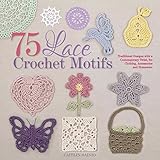
- St. Martin's Books-75 Lace Crochet Motifs
Choose a learning route that fits your situation
- For in-person instruction: Ask a nearby guild whether it accepts beginners, when classes or meetings take place, and whether you can try the technique before buying equipment.
- For equipment support: Ask what a beginner needs and whether the group can help source a pillow, bobbins, pins and thread. The Cape Lace Guild specifically says it supplies basic equipment and materials to members; that does not establish what is available elsewhere.
- For self-directed learning: Instruction books or demonstrations can help you study at your own pace, but they do not provide the same immediate feedback as an experienced lacemaker. A personal account from a visitor to South Africa recalls learning stitches from a lacemaker in Franschhoek; it is an individual experience, not evidence of a current class or general local availability.
- For a particular direction: Decide whether you are most drawn to traditional technique, the history of lace, or contemporary textile art. These interests can overlap, but they may lead you toward different teachers, collections or artists.
There is no evidence here that one route is best for every learner. Geography, access to live teaching, equipment sourcing and the kind of lace practice you want to explore are the useful comparisons.
Independent reader supportYour contribution helps us test, update, and keep practical guides available for everyone.What bobbin lace involves—and what to ask before buying a kit
Bobbin lace is the Cape Lace Guild’s stated focus. In this technique, thread wound on bobbins is worked over a lace pillow and secured with pins as the pattern develops. A beginner usually needs instruction or a reliable guide as well as suitable equipment; buying a kit without checking what it contains may leave out materials or explanations needed for the first project.
Best Value
If you are comparing supplies, useful search terms include “bobbin lace making kit,” bobbin lace bobbins, lace pillow, lacemaking pins, fine lace thread and a bobbin-lace instruction book. No particular kit, brand, price, contents or current South African retail availability is established here. A personal retrospective recalls that supplies were difficult to find in South Africa before widespread internet access, but that historical anecdote should not be treated as a description of today’s market. Asking a local teacher or guild what to buy first can help avoid choosing equipment that does not suit the technique you intend to learn.
Lace as contemporary art
South African lacemaking is also visible in contemporary art. Artist Pierre Fouché describes lace-making as a way to engage with images, history and identity, and says bobbin lace is central to his practice. His biography records participation in Women’s Work at the Iziko South African National Gallery in 2016 and representation of South Africa at the 2021 Indian Ocean Craft Triennial in Perth. Fouché offers one example of lace used as an artistic medium; his approach should not be treated as representative of every maker or guild.
Quick wins for a faster PC:
Scan for outdated or missing drivers - takes under a minuteDriver Scan →Repair Windows errors before they cause bigger problemsFix Now →Fix the driver behind crashes, sound loss and screen glitchesFind Drivers →What the available record does—and does not—show
The sources document particular schools, organizations, teaching activity and one contemporary artist. They do not provide a current, nationally representative count of lacemakers or a complete map of active groups. Historical membership totals from the Witwatersrand guild describe that guild in the 1980s, while the George account describes local activity in 2010. For present-day participation or local meeting details, a direct enquiry to a relevant guild is more reliable than extrapolating from those older records.
Quick Recap

Product prices and availability are accurate as of the date/time indicated and are subject to change. Any price and availability information displayed on Amazon at the time of purchase will apply.




