Outdated Drivers Are Slowing You Down
What’s actually slowing this PC down?
Pick the symptom - the matching free tool is one click away.
One free scan finds every outdated or missing driver and matches the right update for your exact hardware.Free scan · exact hardware match
Windows Errors? Fix Them Before They Spread
Repair common Windows errors and clear accumulated junk for a smoother, more stable PC - no reinstall needed.Free scan · no reinstall
ThatPainter is reader-supported. When you buy through links on our site, we may earn an affiliate commission. Learn More
Leaves are plant structures best known for their role in photosynthesis: chlorophyll absorbs light energy and gives many leaves their green color. In many deciduous plants, shorter autumn days cue chlorophyll breakdown, revealing other pigments before a separation layer forms and the leaf falls. This guide explains those changes and the visible features that help distinguish leaves—a useful starting point for observing and depicting them.
What leaves do
In many plants, leaves are the main sites of photosynthesis, the process that uses light energy to help make sugars. Chlorophyll is central to capturing that light and is associated with the familiar green appearance of a leaf. Rutgers professor Jason Grabosky describes chlorophyll as “a substance plants use to turn light into sugar that makes a leaf look green.” Rutgers University explains the role of chlorophyll in leaf color.

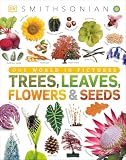


As an Amazon Associate I earn from qualifying purchases.
Leaves vary in shape and arrangement across plants. A simple leaf has one blade; a compound leaf is divided into separate leaflets. These differences, along with edges, veins, and other features, make leaves useful clues when observing or identifying a plant.
Why many leaves change color in autumn
In many deciduous plants, shorter days are a seasonal cue. The plant breaks down chlorophyll and stops continually replacing it, so the green fades and other pigments in the leaf become easier to see. Some of the recovered molecules can be reused rather than made from scratch later. This process applies to many deciduous plants, not every plant or every climate. Arizona State University’s Ask A Biologist describes the seasonal breakdown of chlorophyll.
#1 Best Overall
Yellow and orange: carotenoids
Carotenoids contribute yellow and orange tones. They are present in leaves whose green chlorophyll can mask their color; as chlorophyll declines, those tones show more clearly.
Quick wins for a faster PC:
Repair Windows errors before they cause bigger problemsFix Now →Fix the driver behind crashes, sound loss and screen glitchesFind Drivers →Red and purple: anthocyanins
Anthocyanins contribute red and purple tones. The balance of pigments varies by plant species, which is one reason autumn colors differ from one tree to another. UC Botanical Garden at Berkeley explains the main pigment groups and seasonal cues.
Rank #2
How light and weather affect fall color
Pigment mix is only part of the picture: conditions influence how vivid the colors become. UC Botanical Garden at Berkeley describes bright light as supportive of anthocyanin production and associates vivid color with dry sunny days followed by cool, dry nights. Cloudy, warm conditions can produce duller color. These are general relationships, not a forecast for a particular place or season.
Why leaves fall
Color change and leaf detachment are related parts of seasonal change, but the pigments do not themselves make a leaf fall. Before detachment, a separation layer develops at the base of the petiole—the leaf stalk—where it joins the twig. Wind and rain can then help loosen or mechanically detach the leaf. UConn Extension describes the separation layer, and Rutgers notes the role of wind and rain.
Rank #3
How to look closely at a leaf
Color alone is not a reliable way to identify a plant: it changes with season and conditions. Compare several features instead:
Do these 3 things before closing this tab:
1Clear out junk files and repair common Windows errors2Scan for outdated or missing drivers - takes under a minute3Repair Windows errors before they cause bigger problems- Overall shape: Note whether the blade is round, oval, lobed, or another form.
- Tip and base: Observe how the blade ends at its point and where it meets the stalk.
- Margin: Check whether the edge is smooth, toothed, or lobed.
- Veins: Look at their direction and pattern across the blade.
- Texture: Compare surface qualities such as smoothness or roughness.
- Leaf arrangement: Decide whether you are looking at one simple blade or a compound leaf made of leaflets.
These traits are among those used in leaf-based species identification, but they are not a complete field key for any particular region. For a species identification, compare the leaf with a reliable guide covering the region and plant group; a review of leaf-identification methods discusses these visual descriptors.
Quick Recap
Best Value

Product prices and availability are accurate as of the date/time indicated and are subject to change. Any price and availability information displayed on Amazon at the time of purchase will apply.




