Free tools Windows power users keep installed
One-click scans. No signup required.
ThatPainter is reader-supported. When you buy through links on our site, we may earn an affiliate commission. Learn More
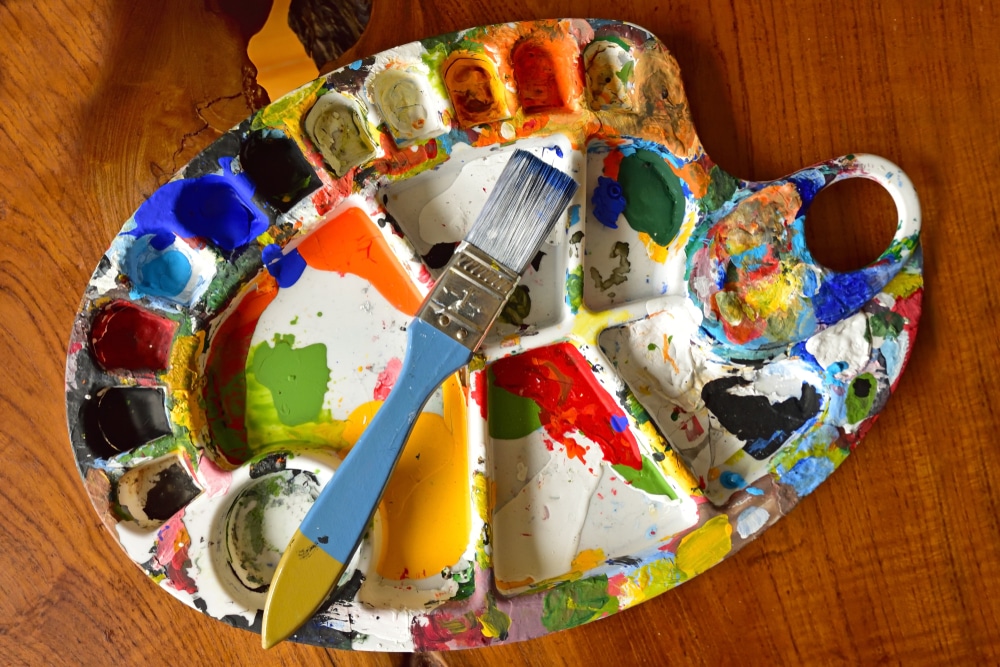
Hard paint brushes are a real irritation when you’re just trying to get on with your painting. To avoid this, you should clean your paintbrushes as soon as you finish using them.
As an Amazon Associate I earn from qualifying purchases.
You should take care when cleaning your brushes as they are relatively fragile. The bristles are attached to the paintbrush handle using glue. They are attached to the ferrule.
This is the piece of metal underneath the paintbrush bristles that keeps them in place. If you clean your brushes with chemicals that are too harsh or too much force, you can easily pull out the bristles.
#1 Best Overall

- Removes oils, acrylics, watercolours, stains, & varnishes
- This is a simple one-step total care process to keep your brushes performing like new!
- It works on oils, acrylics, watercolors, varnishes, glazes and most synthetic finishes
- For use on sable, bristle and synthetic brushes
Before attempting any of the cleaning methods below, you should first wipe off any excess paint from the bristles of your brush. Use a paper towel to do this until no more paint comes off of the brush.
What are the types of paint?
Lacquer is a type of paint primarily used as a finishing agent. It is known to be very solid and durable and dries into a clear or colored coating. The finish is resistant to scratches and chips, it is waterproof and breathable. You can use lacquer paints on most surfaces.
Oil-based paints are made from a pigment and a resin in a solvent thinner. This could be a linseed oil or a synthetic alkyd. The thinner will evaporate as the paint dries, leaving the resin to create a hard coat.
The Tool Desk
Outbyte Driver Updater FREEScan for outdated or missing drivers - takes under a minuteDriver Scan →Outbyte PC Repair FREEClear out junk files and repair common Windows errorsFree Scan →Latex paints or water-based paints are very common. They are made of 3 main components – water, pigment, and binder. The water is used as a carrier to bulk out the paint.
They are the most environmentally friendly paint of all the types. The paint colors stay more vibrant for longer, produce fewer odors, and are much quicker to dry.
Shellac paints are primarily used as a primer. This can then be painted over with oil or water-based paints. They are not often used as a finishing coat and tend to be used to make the topcoat appear more finished.
How to clean a paintbrush immediately after use
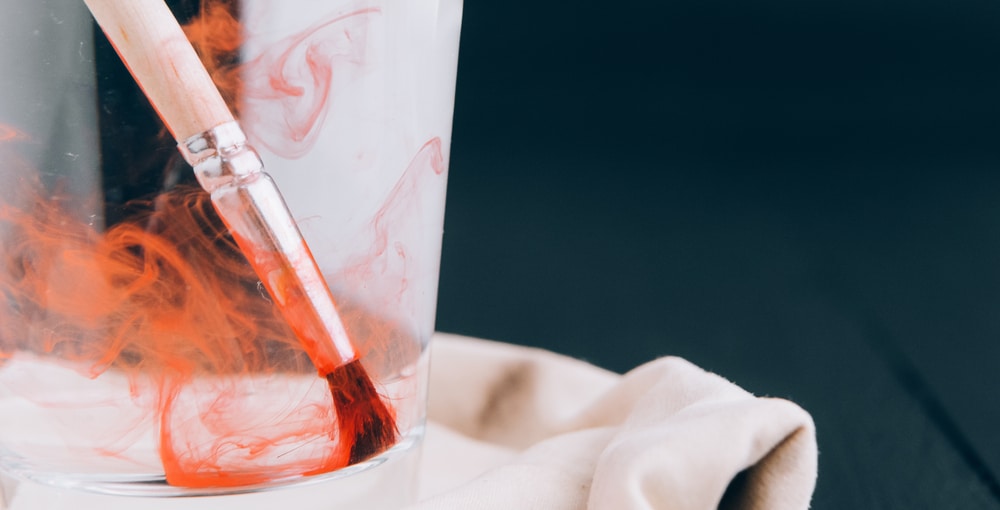
The method you use to clean your paintbrush varies depending on the type of paint that you used. If you have been using latex or water-based paints then you can simply run the bristles of the paintbrush under warm running water.
Run your fingers through the bristles to dislodge the paint in the middle. If you are still struggling to get rid of the paint, add a few drops of dish soap to the bristles. Rub this in to form a lather and rinse until the water runs clear.
If this is not getting the paint off as well as you like, try this method. Fill a glass jar with hot water and a few drops of dish soap. Swirl the bristles of your brushes around in the jar until the paint particles begin to fall off. Rinse well after this.
You should only ever use warm water to deal with hardened or excess paints. This is because the heat will loosen any caked on paint more easily. Cold water is more likely to cause the paint to seize up and harden, making it harder to remove.
If you have used a stain or an oil-based paint then water will not get the paint off. You should soak the bristles of the brushes in turpentine or mineral spirits. You should pour this into a jar that you do not intend to use for food.
Recommended Free Tools
Rank #2

- Cleans and Restores Paint Brushes and Rollers Helps remove dried paint, coatings, and residue from brushes and rollers, supporting better performance and extending tool life.
- Works on Latex and Oil Based Paint Designed to clean a variety of paint types, making it a versatile solution for both water based and oil based coatings.
- Helps Revive Stiff and Hardened Brushes Penetrates buildup to help loosen hardened bristles and improve flexibility for smoother application on future projects.
- Easy Soak and Rinse Application Simply soak tools, work solution through bristles, and rinse clean. Ideal for both quick cleanups and deeper restoration.
- Ideal for DIY and Professional Use Great for painters, contractors, and home improvement projects looking to maintain tools and reduce replacement costs.
Place this near a window, or in a well-ventilated area. Allow the brushes to sit here for up to 2 hours before rinsing clean.
What causes paintbrushes to harden?
This is caused by remnants of paint being left to sit on the bristles of the paintbrush. Over time, the liquid will begin to evaporate from the paint and what is left will stiffen and turn hard.
This will matt the bristles of the brush together, making them appear hard and unusable.
Solutions
Vinegar
This is an easy way to clean hardened paintbrushes without the need to use harsh chemicals. If you have young children in the home and you are concerned about their health, this method will work well.
Quick wins for a faster PC:
Fix the driver behind crashes, sound loss and screen glitchesFind Drivers →Clear out junk files and repair common Windows errorsFree Scan →Pour some white vinegar into a large pot and place it on your stovetop. You should allow this to heat until the vinegar is just under boiling. Alternatively, you could heat it in the microwave.
Transfer the vinegar to a glass jar that you have no intention of using for food. Submerge the bristles of the paintbrushes in the vinegar, ensuring the liquid level covers the bristles entirely.
Leave the paintbrushes to sit in the vinegar for 20 minutes. Check on them once this time has elapsed to see if the vinegar has softened the bristles. If it has not, allow them to sit in the vinegar for a further 10 minutes.
If you only have apple cider vinegar to hand, this will work too. Simply pour cold apple cider vinegar into a glass jar and submerge the bristles. Allow the paintbrushes to sit in the liquid overnight.
Fabric softener
If the vinegar did not do the trick, try using some fabric softener for laundry. This is particularly useful as it is designed to soften fabrics and will have the same effect on the paint brush bristles.
Fill a glass jar with hot water and add in a teaspoon of fabric softener. Swirl the bristles of your brushes around in the jar to loosen the paint. The swirling motion will also help to allow the fabric softener to permeate to the center of the bristles.
You can allow the brushes to sit in this liquid for up to 1 hour.
Rank #3

- RUGGED & CORROSION-RESISTANT: Made of strong 420 stainless steel that flexes without breaking. Stays sharp and resists rust, even with frequent use
- MINI ROLLER CLEANER: sized to effectively clean mini rollers
- LARGE ROLLER CLEANER: Large diameter Mini Roller Cleaner- sized to effectively clean large diameter mini rollers or even short napped regular covers
- STANDARD ROLLER CLEANER: sized to effectively clean standard size covers from short to long length naps
- PAINT BRUSH CLEANER: Fine tipped, long toothed comb works great to separate bristles and allow deep cleanse/removal of paint from brush head
Combing the bristles
Once you have used one of the methods above to dislodge most of the hardened paint, we suggest combing through the bristles. This will draw out any dried clumps of paint from the center of the bristles. It will also help the cleaning agent to fully permeate the bristles.
You can use a brush comb specifically designed for this purpose. Alternatively, a fork or craft knife will do the same job. If you are struggling to get the tines through the brush then add a few drops of fabric softener to the bristles.
This will work in the same way as conditioner works on tangled hair. In a pinch, you can even use a hair conditioner on paintbrushes.
Rinse the brushes well under running water. Set them aside to dry naturally before you next need to use them.
Paint thinner
If you do not want to keep repeating the cycle of rinsing and combing, a more industrial solution is to submerge the bristles in paint thinner.
The Tool Desk
Outbyte Driver Updater FREEFix the driver behind crashes, sound loss and screen glitchesFind Drivers →Outbyte PC Repair FREERepair Windows errors before they cause bigger problemsFix Now →Paint thinner is a corrosive substance and can cause real damage to your skin. For this reason, it is important to take appropriate safety precautions when working with it.
We advise wearing personal protective equipment including safety goggles, a mask, and gloves.
Pour enough paint thinner into a glass jar to submerge the bristles of the brush. Allow the brushes to sit in the jar for a minimum of 10 minutes.
For harder bristles, you can leave the brushes there for up to 1 hour. You can swirl the brushes in the liquid but take care not to splash the paint thinner over yourself.
Rinse the brushes well under hot water.
Brush cleaner (white spirits / mineral spirits)
These can be used as a form of paint thinner and the substances are commonly confused. Brush cleaners are less toxic, containing far fewer chemicals such as VOCs and sulfur. They are also less odorous and tend to be more expensive than generic paint thinner.
Pour some brush cleaner out of the can and into a glass jar. If your brush handle does not have a hole in, drill one through using a ⅛ inch drill bit. This will enable you to suspend the brush over the cleaning solution using a stiff wire.
Rank #4
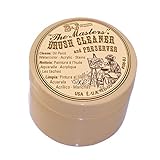
- "The Masters" Brush Cleaner is the world's finest total care product for brushes that cleans and conditions in one step.
- Formulated for use with artist paints, ink, dye, stain, and varnish. Also works with house paint, grass stains and grease!
- Can even remove old dried on paints and stains - allow product to sit on brush up to several hours when removing dry paint.
- Non-abrasive cleaner won't harm synthetic or natural hair brushes like Kolinsky sable.
- Made in the USA by General Pencil Company to ACMI AP Non-Toxic standards.
Place the can of paint thinner in an external environment, such as a shed or garage. Suspend the paintbrush over the can, ensuring the brush cleaner covers the bristles but not the ferrule.
Cover the can with a plastic bag to reduce the emission of toxic fumes. You should put this at a height, clear out of the reach of young children and pets.
Free tools Windows power users keep installed
One-click scans. No signup required.
Allow the brush to sit in the brush cleaner for a day or two. This will allow most of the paint to detach from the bristles and fall off into the solution. Transfer the brush cleaner into a second container. Swirl the brush around to further dislodge the remaining paint.
Allow both of the containers to settle overnight. This will allow the paint to settle at the base of the liquid and the two will separate. This allows you to pour off the clean brush cleaner into a third container for future use.
Moisturizer
Grab a baby lotion or body moisturizer that will dry clear and is not overly greasy. Baby lotion is preferred for use on paintbrushes however moisturizer will do the same job.
It is important that the lotion you use is not greasy as leftover grease residue can coat the paintbrush bristles and impact their functionality.
Squirt a small pea-sized quantity of your chosen lotion into the palm of your hand. Run the bristles of your paintbrush through the pile of lotion in a back and forth motion, as if you were emulating painting your hand.
Take care to ensure that the bristles are bending fully. This should allow the bristles to be fully coated until they reach the ferrule. If you are doing this process correctly, then it will take around a minute and a half.
Use a clean paper towel to wipe off any excess moisture. Start near the ferrule and work in gentle, circular motions until you reach the tip of the bristles.
Use medium-firm pressure to work down the bristles to dislodge any paint. Take care not to bend or pull out the bristles as you do so.
Do these 3 things before closing this tab:
1Scan for outdated or missing drivers - takes under a minute2Repair Windows errors before they cause bigger problems3Fix the driver behind crashes, sound loss and screen glitchesLacquer thinner
You will need to use a specifically designed solution if you last used the brush with lacquer paint. Add lacquer thinner to a glass jar and submerge the bristles of the brush in it.
Best Value

- ✅ GENTLE ON HANDS, TOUGH ON PAINT: No paint thinner, no turpentine — just a powerful natural cleaner that removes wet or dry paint in seconds. Safe to use directly on your hands and brushes.
- 🎨 WORKS ON EVERY TYPE OF PAINT: Whether it’s acrylic, latex, oil, or shellac, Green Piece easily breaks down paint buildup and restores your brushes so they feel brand new again.
- 🌿 100% NATURAL & NON-TOXIC (Made in USA): Made from fruit extracts and minerals, this cleaner is fully biodegradable and eco-friendly. No chemicals, no fumes — just clean brushes and peace of mind.
- 💪 REAL CLEANING POWER: Goes beyond paint — removes epoxy, caulking, dirt, and stains from wood, metal, and other surfaces. Keeps your brushes soft and conditioned for long-lasting use.
- 🍊 FRESH CITRUS SCENT & VERSATILE USE: Smells like oranges and can be used to clean your art desk, tools, or even pre-treat paint stains on clothes. Works great on glass, jewelry, pots, and pans too!
Allow the paintbrush to soak for at least 30 minutes. It should be left in a very well-ventilated area to prevent anyone from inhaling the fumes.
Swirl the paintbrush around in the jar. This should help to dislodge any remaining lacquer on the brush bristles. Rinse well under warm water to remove all traces of paint and lacquer thinner.
Wash well in warm and soapy water and rinse until the water runs clear.
Quick wins for a faster PC:
Repair Windows errors before they cause bigger problemsFix Now →Fix the driver behind crashes, sound loss and screen glitchesFind Drivers →Rubbing alcohol
Can alcohol remove paint? Yes, This is a super simple hack. All you need to do is work in some rubbing alcohol to the bristles of your brush. Once this has permeated the bristles then you should be able to rinse off all of the paint particles.
Use the moisturizer hack after this, as rubbing alcohol can seriously dehydrate the bristles of your brush.
Independent reader supportYour contribution helps us test, update, and keep practical guides available for everyone.What method do you use for each paint type?
Lacquer paints will need the use of a lacquer thinner.
Oil-based paints need a mineral spirit or brush cleaning solution.
Recommended Free Tools
Water-based paints are the easiest to clean. All you need to clean these is some water. The fabric conditioner and dish soap methods can also be used if the paint seems to be more caked on.
Shellac primers will need the use of denatured alcohol to clean the brush.
If you are not sure about what paint you have used, or which cleaning solvent to use you should check the paint tin. The manufacturers will have clearly stated the type of paint and are likely to give you instructions on how to most effectively clean your brushes.

Crashes, No Sound, or Screen Glitches?
Random freezes, missing sound and display glitches usually trace back to one bad driver. Find and replace yours safely.Free scan · under a minuteWindows Errors? Fix Them Before They Spread
Repair common Windows errors and clear accumulated junk for a smoother, more stable PC - no reinstall needed.Free scan · no reinstallJim Bettesworth well known for his can-do attitude and often takes jobs other companies were unwilling or unable to do. Experienced and educated in concrete construction and painting jobs. Read More.
Quick Recap
Product prices and availability are accurate as of the date/time indicated and are subject to change. Any price and availability information displayed on Amazon at the time of purchase will apply.




