Windows Errors? Fix Them Before They Spread
Outbyte PC Repair · freeRepair common Windows errors and clear accumulated junk for a smoother, more stable PC - no reinstall needed.
Fix My PC Now →ThatPainter is reader-supported. When you buy through links on our site, we may earn an affiliate commission. Learn More
Start with the project you want to make—not the prettiest print in the shop. Bring its pattern or instructions and any measurements you have, then ask staff to help you find a suitable fabric and confirm the quantity. Before buying, check the fabric’s feel, width and care details, and ask how it is measured and cut; store policies vary.
What to bring before you go
These are practical preparation steps, not entry requirements. You do not need to know specialist fabric terms to get started.
As an Amazon Associate I earn from qualifying purchases.
Free tools Windows power users keep installed
One-click scans. No signup required.
- A project: Even a small practice item gives you a starting point. The Sewing & Craft Alliance guide Your Guide to Successful Sewing: The Right Fabric advises keeping the project’s silhouette in mind when choosing fabric. It notes that colors and prints may catch your eye first, but the project should guide the choice.
- Instructions or a pattern: Check its fabric recommendations and required quantity. A supply list can also help staff point you toward appropriate options.
- Relevant measurements: For a home-decor project, bring the window, table or other dimensions. For a sewn item, note finished measurements if they affect your choice.
- A reference, if matching matters: Bring a material sample or color reference. Screens and shop lighting can affect how colors appear, so compare the reference with the actual fabric.
- A budget and, if useful, an inspiration photo: These help you explain the look you want and narrow the choices.
If you do not have a pattern, describe what you are making, how it will be used and how you want it to look or feel. That gives staff a useful starting point, though the amount of fabric may be harder to determine without instructions or measurements.
How to choose fabric for your project
Two fabrics can have similar colors but behave very differently. Compare properties that affect whether the fabric suits the pattern and the finished item.
#1 Best Overall

- ULTRA SHARP FABRIC SHEARS: Made of high carbon steel which is stronger than stainless steel, the craft scissors have great qualities including good edge retention and ability to make clean cut through multiple layers of fabric.well worth investing to help you cut down on time and money and perfect your sewing creations.
- COMFORTABLE USE: This fabric scissors are rounded and ergonomic to fit easily into your hand without rubbing or pinching, and rubberized handles that allow for a comfortable grip and precise cutting. You don’t have to worry about hand fatigue when using these scissors for extended periods of time.
- PROFESSIONAL DESIGN: Bent handle helps hold materials flat for smooth, accurate, tabletop cuts. Chamfering process on tailor scissors blade head avoids scratching cloth accidently.
- ALL PURPOSE USE SCISSORS: This sewing scissors can be used for all kinds of cutting tasks. From fabrics and leather to plastic bags, packaging materials and thin and soft materials, these scissors are quite versatile.
- BONUS MEASURING TAPE: Flexible and portable measuring tape, made from soft plastic material, white color, suitable for measuring curved or flat surfaces, dual sided to show inches and centimeters, measuring range is 60 inches / 150cm. Free replacement for any quality issue.
- Project fit: Does the pattern or intended use call for a particular kind of fabric, such as a woven or a stretchy material?
- Drape and structure: Does it hang softly, or hold a shape? Consider what the finished item needs to do.
- Weight and width: Check whether they suit the project and its pattern layout. Width affects how much length you may need.
- Stretch: Check whether the project calls for stretch or a stable fabric.
- Fiber and care: Consider the composition and how the finished item will be washed or maintained.
- Color and print: Check the shade, scale, direction and repeat, especially if the print needs to line up across pieces.
- Budget and availability: Confirm that you can buy enough for the project, ideally in the cut you need, at a price that works for you.
Some fabric listings provide details such as composition, weight, width, stretch, hand-feel, care and intended use. The Fabric Shop’s product information is one example; listings differ, so ask about any detail that is missing or unclear. The Fabric Shop
What to do at the cutting counter
- Describe the project. For example: “I’m making a loose summer top from this pattern. It recommends a woven fabric. Can you help me find something lightweight that drapes?” If you have no pattern, describe the item’s use and the feel you want.
- Ask for help comparing suitable fabrics. Share the pattern recommendation, your preferences and any care or budget needs. You can ask what a label means rather than guessing.
- Feel and inspect the fabric. Check how it feels, look at both sides, and consider print scale and direction. If the color, texture or print is critical, ask whether the shop offers a swatch before you commit to a larger cut.
- Confirm the amount and unit. Show the pattern’s quantity recommendation and ask how the store measures fabric—by the yard, metre or another unit. A cut is measured along the fabric’s length; width is a separate measurement. Check the bolt or product information for width rather than assuming it is the same across fabrics. The Fabric Store says its online listings show usable width between the selvedge holes, a detail specific to that retailer. The Fabric Store FAQ
- Ask how the cut will be supplied. Confirm whether the fabric will be one continuous piece and whether a minimum cut applies. Some items may be packaged rather than cut to length; The Fabric Shop distinguishes cut-to-length fabric from packaged notions in its own store information. The Fabric Shop
- Check the rest of the supply list. Patterns may call for thread, a zipper, interfacing or buttons. Use the instructions to see what the project needs rather than buying extras by guesswork.
- Keep the fabric details. Review the receipt and keep the label, or photograph the bolt information, so you can refer to its composition and care instructions later.
How small a cut can you buy?
There is no universal minimum: check the particular store, location and order method. For example, The Fabric Store says its online orders have a 0.5-metre minimum and its Australian retail stores have a 20-centimetre minimum. The Fabric Shop describes a one-metre minimum for cut-to-length fabric and offers swatches. These are policies reported by those businesses, not standards for other shops. The Fabric Store FAQ · The Fabric Shop
Rank #2

- RAZOREDGE FABRIC SCISSORS: Ultra-sharp, premium-grade stainless steel blades with a precisely honed edge for clean cuts to the tip
- SMOOTHEST CUTTING ACTION: Advanced pivot design delivers exceptionally smooth performance through fabric
- ERGONOMIC CONTROL: Thumb and finger loops with ergonomic sculpting match hand shape and natural movement
- SOFTGRIP TOUCHPOINTS: Added comfort and control for steady, accurate cutting
- PROTECTIVE SHEATH INCLUDED: Keeps blades safe and protected; 8", White/Orange
Swatch policies also differ. The Fabric Shop describes its sample swatch as around 25 cm × 25 cm; ask the shop about availability, dimensions, price and ordering rules before relying on a sample service. The Fabric Shop
Independent reader supportYour contribution helps us test, update, and keep practical guides available for everyone.Questions you can ask without knowing the jargon
- “My pattern recommends this kind of fabric. Can you help me find a few options?”
- “Does this fabric have enough drape—or structure—for what I’m making?”
- “How should I read the width and quantity on this bolt?”
- “Can I buy the amount I need in one continuous cut?”
- “Do you offer swatches, and what are the rules?”
- “What care instructions or other supplies should I check before I decide?”
A clear description of the project, what the fabric needs to do and the quantity your pattern calls for is enough to begin the conversation. The reader question “How do I buy fabrics in physical shops?” appears in an online sewing community discussion; it reflects a common uncertainty about the basic process, not a retail rule. Sewing community discussion
Quick Recap
Best Value

- Ultra Sharp Fabric Scissors: Wteehn sewing scissors for fabric cutting is made of high-quality galvanized manganese, exquisite hand-forged craftsmanship, high hardness, sharp, durable, rust-proof and not easy to deform, and can cleanly cut thick materials such as multi-layer fabrics and leather
- Professional Fabric Sewing Scissors: Our tailor scissors are designed for fabric cutting and sewing tasks, and the adjustable bolt lock ensures precise cutting. The blade angle is 45°, scientific and labor-saving, this professional fabric scissors can achieve smooth and accurate cutting
- Ergonomic Design: The aluminum alloy handle wrapped with plastic on the outside is ergonomically designed, comfortable to hold and non-slip, which can reduce hand fatigue after long-term use. The upgraded ear protection design fits the hand muscles, making cutting easy and accurate. There will be no friction or pinching
- Multifunctional Fabric Scissors. This 8" sharp sewing shears is suitable for cutting a variety of materials, including cotton, linen, canvas, leather, non-woven fabrics, etc., to meet your various craft needs and provide work efficiency. The chamfering process on the head of the heavy duty sewing scissors can avoid accidental scratches on the fabric
- Widely Applicable: Whether it is sewing, handicrafts, or home repairs, this sharp sewing shears can provide you with stable cutting performance and help you complete a variety of complex and delicate cutting tasks. It is suitable for sewing, tailoring, quilting, clothing, cutting patterns, alterations, art projects, etc
Rank #4

- 8 ½ inch fabric shears with rubberized handles
- Easily cut through any fabric with these 8.5 inch steel-blade scissors
- Right- or left-handed use
- Rubberized comfort grip handle
- Stainless steel blades are rust resistant and strong against nicks and scratches
Rank #3
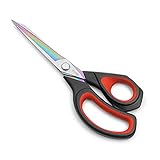
- Durable Strong Stainless Steel Rust Resistant Blades: Forging press manufacturing process enables high-density steel that makes 3 times harder than normal stainless steel and are smoother cutting.
- Ultra Sharp Scissors All Purpose: Easy for cutting more than 16 layers of fabrics. Ideal for sewing, tailoring, quilting, dressmaking, cutting patterns, alterations, hand craft, home and office use etc.
- Multi-color Titanium coating blades. They are strongly resistant to rusting and to adhensives such as glue and tape, making them ideal for almost any kinds of tasks.
- Comfort Grip Handle: Ergonomic design for precision control and max comfort.
- Every Product is independently tested and selected to ensure the performance you expect. The result is a quality item backed by our commitment to your satisfaction.

Product prices and availability are accurate as of the date/time indicated and are subject to change. Any price and availability information displayed on Amazon at the time of purchase will apply.




