Do these 3 things before closing this tab:
1Fix the driver behind crashes, sound loss and screen glitches2Repair Windows errors before they cause bigger problems3Scan for outdated or missing drivers - takes under a minuteThatPainter is reader-supported. When you buy through links on our site, we may earn an affiliate commission. Learn More
Waterproofing basement walls are more important than you might think. A couple of moist stains or small puddles in the basement might not surprise you. But when it’s all flooded during heavy rain, it’s a huge inconvenience. Such cases not only result in damaging the stuff you store there but the whole house as well.
As an Amazon Associate I earn from qualifying purchases.
Over 50% of US households are suffering from the “wet basement,” according to the reports from the American Society of Home Inspectors.
Windows Errors? Fix Them Before They Spread
Repair common Windows errors and clear accumulated junk for a smoother, more stable PC - no reinstall needed.Free scan · no reinstallOutdated Drivers Are Slowing You Down
One free scan finds every outdated or missing driver and matches the right update for your exact hardware.Free scan · exact hardware match
Paint peels off, mold and mildew create whole colonies on the walls, and these guys spread really fast. That’s why the sooner you find out the cause of such humidity and get rid of it, the better.
#1 Best Overall

- Efficient Design - This small submersible pump uses a top suction design that eliminates air lock and minimizes clogging from debris at the bottom of the sump pit. Install in about 15 minutes with no need to drill a weep hole.
- Tough And Durable - A corrosion-resistant epoxy coated steel motor housing, stainless steel fasteners a cast-iron volute give this small pump long life in tough sump pump applications
- Quality You Deserve - This corded electric water pump is proudly assembled in the USA and warrantied for 3 years. Its dependable, efficient, ultra-quiet performance provides quality you can trust
- Indoor Use Only - This 1/3 HP WAYNE sump pump supports basement water removal during heavy water flow from rain or snow melting. Model CDU790 can pump up to 4,600 GPH to help keep your basement dry
- Tested Vertical Float Switch - Integrated float switch tested to 1 million cycles for dependable automatic operation
We’ll guide you through the process, showing how to waterproof your basement walls and never have to jump over puddles in the house ever again. Here, you’ll find the most frequent mistakes people make during waterproofing and how to make things right.
Why You Need to Waterproof Basement Walls
A lot of people think that their basement walls were waterproofed by builders during the initial construction. This is true in most cases, but everything has an expiry date. The house settles with time, and the walls crack a little bit. While it’s not dangerous for the structural integrity of your house at this point, water always finds a way to seep through the tiniest holes. The soil gets damp and acts as a guide for moisture to enter your home.
The walls turn damp, but the moisture evaporates, making the air humid as well. If you don’t have a humidifier, the basement will always be humid: the water evaporates into the air, the moisture from the air then turns into condensate, and so on.
The Tool Desk
Outbyte Driver Updater FREEScan for outdated or missing drivers - takes under a minuteDriver Scan →Outbyte PC Repair FREEClear out junk files and repair common Windows errorsFree Scan →One could say a good dehumidifier is the best solution. Well, it is one of the solutions, but only a short-term one.

If you want long-term results, it’s better to waterproof your basement walls.
You can either do it yourself or call a professional for help. This depends on the severity of the problem and its causes.
In case you want to try and turn waterproofing into a DIY project, we’ll help you with a set of useful tips!
Dos of Waterproofing Basement Walls
Let’s see what you should definitely do!
Determine Where the Water Comes From
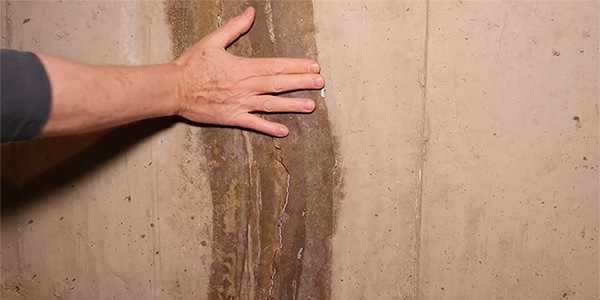
Concrete is porous, which makes it easy for you to determine where the water comes from. Look for streaks it leaves on the surface. The most frequent leakage locations are window corners, cracks, mortar joints, any holes, even if they seem insulated (like the enters and exits of pipes), etc.

If you don’t see the streaks, but the whole wall feels wet, a more thorough investigation is required. One simple test will give you clues:
- Choose a part of the wall and dry it as much as you can with a rag;
- Take an aluminum foil sheet and tape it to that part of the wall;
- Come back in 24 hours, take the foil off and see if the underside is wet.
If it is, the water comes through the wall, and you will have to treat it. If the underside isn’t wet, it means the moisture comes from another place in the basement. This may be anything from a crack near the window to your basement shower. The latter is easy to fix with a proper ventilation system. It will move the steam outside, not leaving much moisture inside the basement.
Make Use of Hydraulic Cement
Hydraulic cement can help you greatly if the main leakage goes through cracks near the footing of the basement. There are things called cold joints that are created when the foundation is poured. First of all, the builders pour the footing that will later support your basement walls. After it hardens, they pour the walls. These cold joints tend to be quite weak, especially if you have long rainy seasons in the area.
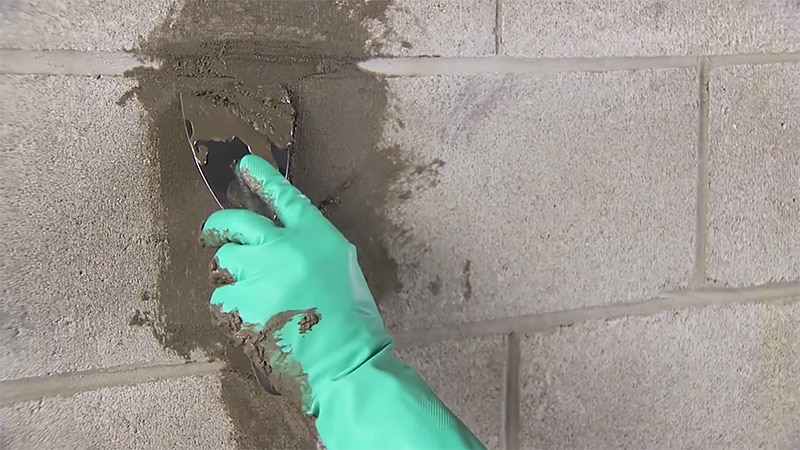
Cracks develop quickly due to the house settling and soil saturation. If this is the main cause of the leakage, you can easily fix it with hydraulic cement.
This type of cement contains ingredients that cause it to expand. It also sets very fast, which is another benefit. To fill the cracks, mix it with water as the label states and put it into cracks with a putty knife of your hands. Make sure to wear protective gloves!
As the solution expands, it fills the cracks and creates a stronger bond, thus waterproofing that part of the wall.
Use Masonry Waterproofing to Cure Interior Walls
Remember the foil test?
If it or any other testing showed that the water seeps inside through the walls, it’s wise to seal it all with waterproof paint. It looks like regular paint and is already mixed, which makes it easier to use.
Quick wins for a faster PC:
Scan for outdated or missing drivers - takes under a minuteDriver Scan →Clear out junk files and repair common Windows errorsFree Scan →Fix the driver behind crashes, sound loss and screen glitchesFind Drivers →Rank #2

- Efficient Sump Pump: Aquastrong sump pump with 1HP powerful motor. Draining water up to 4500GPH Per Hour( 75 gallons per minute) at 5ft. Lift water up to 30ft of vertical height
- Portable Design: Plug in to play while unplug to stop. Bottom suction design filters debris and removes water down to 1/5 inch from the surface. It can handle up to 1/5″solids , ideal for draining hot tub and flooded basement window wells
- Easy Installation: 1-1/4'' NPT discharge comes with 1-1/2'' elbow adapter and snap coupling adapter of 3/4'', 1'' or 1-1/4'', which makes Submersible pump easy to install. 10ft UL power cord provides safety and convenience
- Safe & Durable: The submersible water pump is made of reinforced engineering thermoplastic casing resists corrosion and abrasion. Quality mechanical seal prevents leakage effectively for long service life. Built-in thermal overload protector will keep the motor from burning out when dry running
- Quality Service: Aquastrong customer service provides professional technical supports, keeps your water system stable and worry-free
Here’s how:
- Use either a brush or a roller, whichever is easier for you;
- Apply a layer of paint, thick enough to cover every crack and hole in the wall;
- Wait until the first coat dries completely;
- Apply a second coat and let it dry.
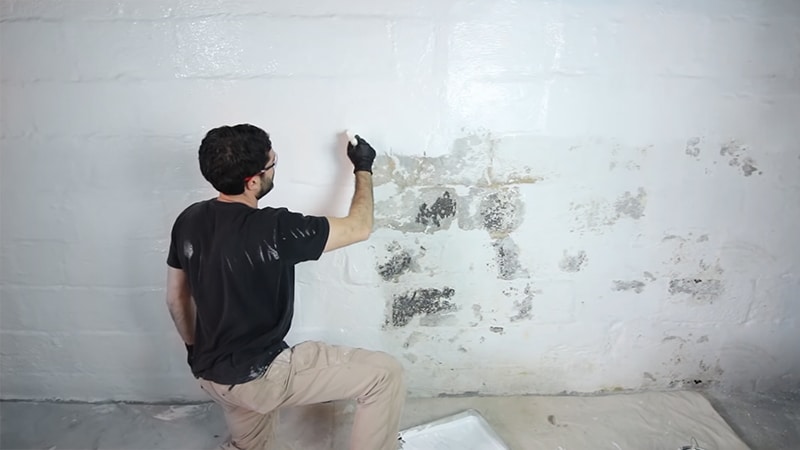
As a result, you’ll get a strong waterproof bond, filling every hole and crack, preventing water from getting to the basement from the outside. As to the volume of paint you need, remember that 5 gallons of it can cover around 500 sq. ft. of the wall surface.
On the market, there are 1 to 5-gallon containers with such paint, and processing 100 sq. ft. of the wall surface will cost anywhere from $50 to $500.
Consider an Interior Drainage System
This system is also called the French drain. You should hire a contractor for the job. Essentially, the system involves digging a trench inside the basement and setting up the drainage and a pump that will push the water outside.
It doesn’t have to be visible. There are hidden systems that gather water from every leak in the wall and push it out.
Quick wins for a faster PC:
Fix the driver behind crashes, sound loss and screen glitchesFind Drivers →Clear out junk files and repair common Windows errorsFree Scan →Scan for outdated or missing drivers - takes under a minuteDriver Scan →Consider an Exterior Drainage System
If the situation is out of control, you can also install a drain tile system. This is quite an expensive project, which costs about $10,000+. You will also require professional help to install this system.
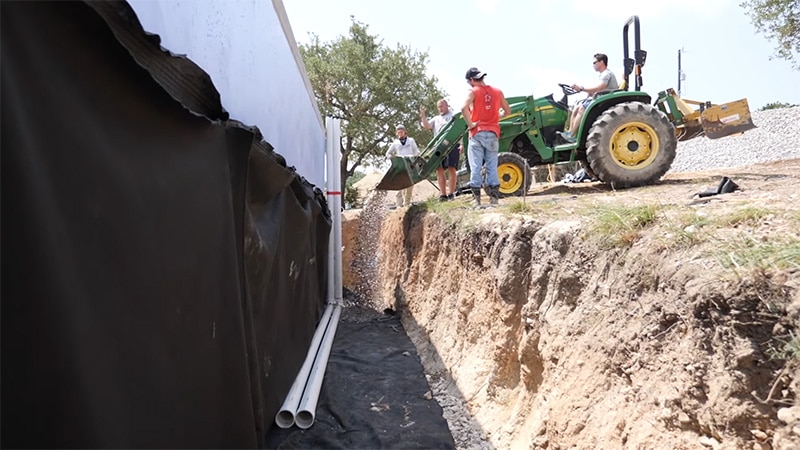
The soil around the location of the basement is excavated, and a complicated system of the perforated drain is installed at the lowest level. Also, the outside parts of the walls are waterproofed with membrane sheets, and a special pump is installed deep in the soil to push the water out.
The system is very complex, but it’s the last resort and a great help for a lot of people who have flooded basements every time it rains.
Keep in mind that this option is:
- Costly;
- Requires a lot of disruption, time, and labor;
- May be dangerous due to clogs in the system that may flood the basement even more.
That’s why, if you choose this option, contact a professional foundation contractor and use high-quality materials.
Also, remember that the time of the year is important in this situation as well. Choose a dry and warm season to install an exterior drainage system.
Do Everything Necessary to Keep Water Away from the Basement
The process doesn’t end in applying a sealant. It’s important to keep the water away from the basement interior. The results of your work will be more durable, and there should be no problems with excess moisture if you:
- Move your inside garden to another place, as well as any plants that require frequent watering;
- Repair pipes, downspouts, etc., in time to make sure water flows without leakage;
- Consider creating a 2%+ slope from the foundation to the yard.
But before you do anything, read the don’ts as well!
Don’ts of Waterproofing Basement Walls
Here are the things you shouldn’t do if the excess water problem is present.
Do these 3 things before closing this tab:
1Repair Windows errors before they cause bigger problems2Scan for outdated or missing drivers - takes under a minute3Clear out junk files and repair common Windows errorsNever Repair Walls or Floors When There’s Standing Water in the Basement
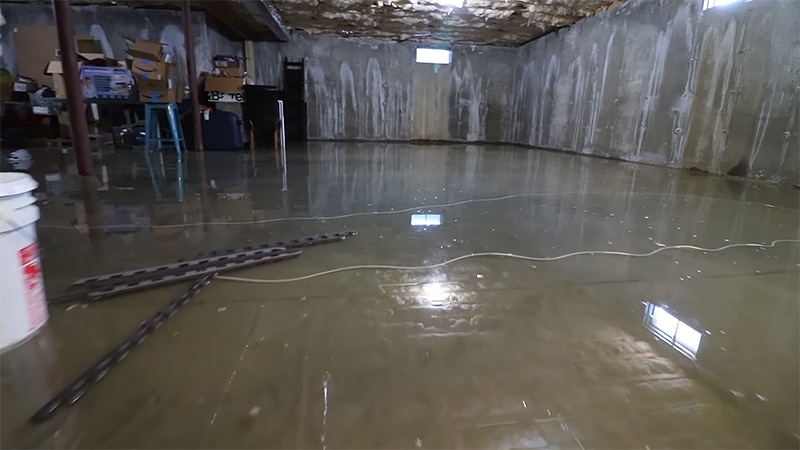
When it’s raining heavily, or the snow melts around the house, the cracks and holes in the walls may allow about 2” of water inside. Depending on the severity of your case, the number may be even higher. While repairs should be done as soon as possible, don’t attempt to do anything while it’s still on the floor.
Dry the basement in any way you can. Use a utility pump, rags, dehumidifiers, fans, ventilation systems, etc. But make sure the water doesn’t affect the outlets. If it does, don’t use them. Only when the surfaces are completely dry, proceed to repair the walls.
A utility pump is a must-have in every house that has a moisture problem. It will successfully direct all the water outside if you attach a regular garden hose to it. Make sure the appliance has an extension cord so you can power it on using a safe, dry outlet.
Rank #3

- High-Capacity 3/4 HP Motor: Pumps up to 5,490 gallons per hour for reliable basement water removal during heavy storms
- Heavy-Duty Cast Iron & Stainless Steel Construction: Designed for long-lasting durability in tough sump conditions
- Integrated Vertical Float Switch: Provides dependable automatic operation while fitting into narrow sump pits
- Top Suction Anti-Airlock Design: Helps prevent clogging and eliminates the need for a weep hole during installation
- Assembled in the USA with 5-Year Warranty: Built for dependable, ultra-quiet performance
Don’t Ignore Window Well Leaks

Don’t ignore even the smallest issue. You may think it won’t make a lot of difference, but in fact, a small leakage may cause great damage.
One such example is insufficient drainage in the window well area.
If no drainage was installed during the construction of the house, the area would retain a lot of water, causing frequent leaks inside the basement.
Fixing the issue will need a lot of labor, but it’s worth it. Consider this:
- Dig about 2 ft lower in the window well area;
- Fill the hole with gravel or other material that will encourage water dispersion rather than accumulating near the well.
- Caulk the area around the window with a mix that fits masonry;
- Buy and install a cover that will direct the water away from your window.
Don’t Attempt DIY Drainage System Installation
If you’re a specialist and represent a contractor, it’s fine. But if you’re a regular homeowner, don’t opt for DIY solutions you find online. Excess water in your basement may lead to devastating consequences, and if you decide to install a drainage system, call professionals to find out what system is the best for your house and install it.
Recommended Free Tools
Yes, the costs start at $5,000 and go up, depending on the drainage needed, but installation by a specialist will make sure there’s no clog the day after.
Draining systems require high-quality materials, exceptional skills, and maintenance, so take this matter seriously.
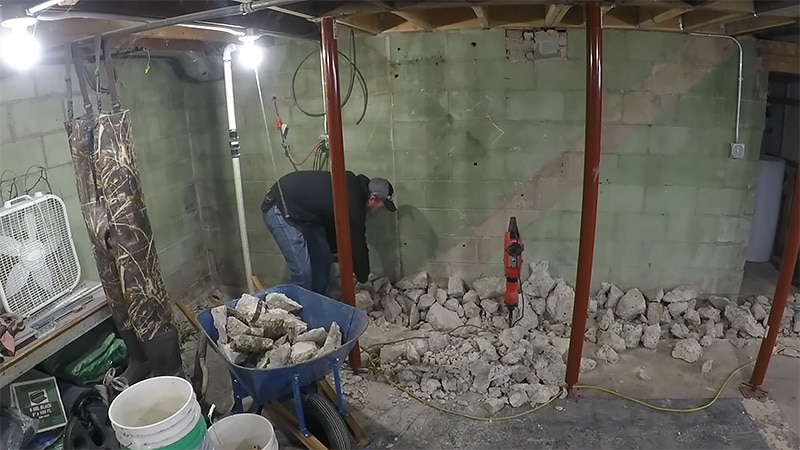
A Temporary Fix or a Professional Approach?
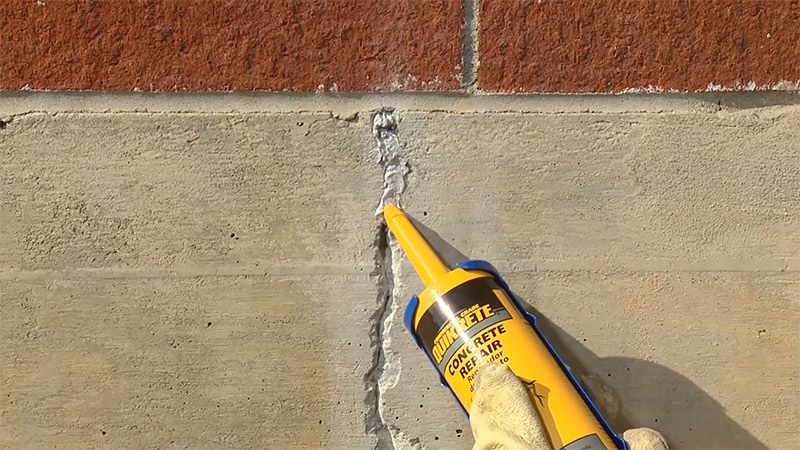
All sealants and epoxy treatments are considered a temporary fix. However, most people choose them instead of complicated drainage systems due to their budget limitations and lack of knowledge about the problem.
While masonry waterproofing products provide only a temporary effect, they do their job perfectly. This is a given if you choose a proper sealant or epoxy. Make sure it contains:
Crashes, No Sound, or Screen Glitches?
Random freezes, missing sound and display glitches usually trace back to one bad driver. Find and replace yours safely.Free scan · under a minuteWindows Errors? Fix Them Before They Spread
Repair common Windows errors and clear accumulated junk for a smoother, more stable PC - no reinstall needed.Free scan · no reinstall- Flexible sealant so that when the walls expand or crack, the product remains a barrier for water;
- Impermeable membrane for maximum waterproofing capabilities;
- Porous foam for a better structure, application, and durability.
Look for the best products online, read reviews by the people who have already used them for a long time. See if they are suitable for your wall material, and follow recommendations by the manufacturers and reviewers.
If they crack soon, it means your walls expand and contract a lot, and the sealant isn’t suitable for such conditions. You can opt for another one with flexible properties.
That being said, a drainage system still should be installed to prevent flooding.
Sealants are an additional fix that will protect the inside part of your basement walls, but proper drainage is the key.
What’s actually slowing this PC down?
Pick the symptom - the matching free tool is one click away.
Special offer. See more information about Outbyte and uninstall instructions. Please review EULA and Privacy policy.
Before the problem gets out of control, invest in a professionally-installed inside or outside drainage system. The latter will cost much more, require permissions, and take much more time and effort, but sometimes it’s the only option. That’s why, if you still get floods in the basement after applying all kinds of interior “band-aids” like epoxy injections and waterproof paints, contact a professional to inspect the area and determine the best way out in terms of effectiveness and budget.
Things to Consider Before Choosing a Way to Combat the “Wet Basement” Problem
This is a list of important factors of consideration and recommendations for anyone who has excess water in their basement:
Rank #4

- Efficient Draning: This 1/2 HP sump pump can effectively remove up to 3450 gallons of water per hour and lift it to a height of 25 feet. Its powerful yet quiet motor ensures excellent performance, making it ideal for efficiently removing basement sewage, wastewater, and rainwater
- Automatic Operation: Equipped with an adjustable float switch and a piggy-back plug for automatic operation. This allows the pump to turn on/off automatically based on the water level in the sump basin/pit. Please adjust the length of the float switch appropriately using a cable lock to meet your sewage needs
- Durable and Tough: The corrosion-resistant stainless steel and thermoplastic construction, cast-iron volute ensure an extended service life in demanding sump pump applications. The top suction design eliminates airlock and minimizes clogging from debris in the bottom of the sump pit. It's easy to install with no need to drill a weep hole
- Safe and Simple: The built-in thermal overload protection prevents the motor from dry burning in low water conditions, ensuring the water pump is protected from damage. The 20 ft UL power cable ensures safe operation and convenience. With a 1-1/2” NPT discharge to comply with building codes, it is suitable for easy installation in 18” diameter or larger sump basins
- Worry-Free: This heavy-duty basement pump is 100% manufacturer-tested and comes with a 1-year warranty. If you have any questions, please do not hesitate to contact our service team. Aquastrong customer service provides professional technical support
- Look for the first signs of excess moisture in the basement. Check on it weekly and see if there’s a specific musty smell, humid air, or small damp spots. When you notice anything, it’s worth checking and finding the cause. An early alarm will help you save money and effort on the repair, preventing more devastating consequences;
- Before starting repairs or overall redecoration, hoping that it will solve the issue, find out the cause. The problem may be not with the walls, and waterproof sealant won’t solve anything. Conduct testing, consult specialists, inspect ventilation; do everything you can to know exactly where the leaks are and choose the most suitable way to fight excess moisture. Only then you can proceed to redecorating the basement or applying a waterproof sealant;
- Don’t hesitate to contact professionals if you need help. There are people who think they know everything better because they are living in this house. However, a specialist will help you find out the cause of leakage much sooner, preventing more serious problems. Always have a contact of a local contractor nearby;
- When using any sealant, epoxy, or membrane, measure the area you have to process first. This will ensure you buy enough materials and finish the work as soon as possible;
- Check with your local authorities for regulations if you need an exterior drainage system. They will inform you about the fluctuations in the water table and the rules you will have to follow;
- Check the National Association of Waterproofing Contractors website for recommendations, consultation, and reliable contractors.
Problems Causing a “Wet Basement”
There are three major causes of excess water in the basement.
Condensation
Condensation happens in conditions with different temperatures inside and outside. When the humidity in the heated air is high, and it touches the walls of your basement that are usually cold, small drops of water are left there, dripping on the floor little by little.
The Tool Desk
Outbyte PC Repair FREEClear out junk files and repair common Windows errorsFree Scan →Outbyte Driver Updater FREEFix the driver behind crashes, sound loss and screen glitchesFind Drivers →You can check if condensation is the culprit in your case with a simple test, much like the aluminum foil one. Tape a piece of plastic wrap to the wall and wait from several hours to a day. If the inside is damp when you take the wrap off, it’s a leak in the wall due to the settling of the house. If the inside part is dry, it’s condensation.
A dehumidifier and proper ventilation or aeration (simply open basement windows from time to time) will help resolve the issue.
Groundwater Swelling
Groundwater swelling occurs when the water table rises so high that the ground can’t hold all the excess storage, leaking some of it. You can detect this cause by inspecting the joining area between the floor and the walls. If there’s water bubbling there, it’s most likely groundwater swelling.
Also, if the basement gets wet after a storm and stays so for quite a while, consider asking a professional to determine the cause. If it’s the swelling, you’ll need an exterior drainage system.
Runoff
Runoff is simply melted snow and ice or rainwater that wasn’t directed away in time. It pushes through the walls, leaking through the tiniest holes and cracks, right into the basement.

Fighting runoff is fairly easy. First of all, you’ll need a slope between the ground and your house to make sure all the water is diverted in the future. Make it 2% or 1” per 12” of length. Thus, rainwater and melted snow/ice won’t gather up in puddles near the house, seeping a bit through the walls.
To detect a runoff, see where the wall is the dampest or where mold, mildew, or algae starts to grow.
Conclusion
Waterproofing your basement is a complex process that consists of several steps, starting from finding out the reason for leaking and finishing with installing drainage systems. It might be expensive and requires a lot of labor, but the damage excess water can make is a much greater problem.
Free tools Windows power users keep installed
One-click scans. No signup required.
Detecting and combating the problem as soon as it appears will save you money, time, and effort.
It will also prevent any serious damage and/or mold and mildew development. As soon as you notice a weird smell or drops of water on the walls or the floor of your basement, contact a professional and ask for help. You can also investigate the matter yourself to see if there’s anything you can do.
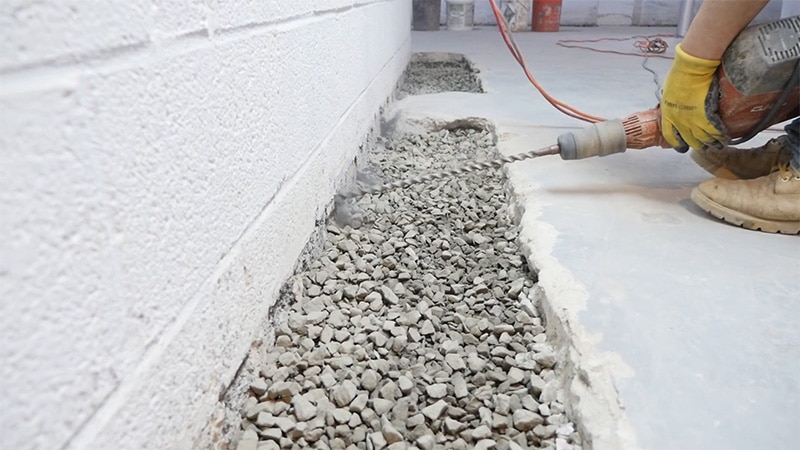
Unfortunately, there’s no universal solution to this “wet basement” problem. You have to find out why the walls are leaking and act accordingly to fix the issue. Consider the location of your house, the type of foundation, the origin of the leaks, and more before doing anything with it.
Even if you use the basement only for storing old stuff, it doesn’t mean you shouldn’t fight excess moisture. Do everything possible to waterproof the walls, and if nothing works, find a reliable local contractor that can help.
Any problem can be solved, but the speed of your reaction matters a lot!

Free tools Windows power users keep installed
One-click scans. No signup required.
Richard Jenkins is a 33-year-old Professional Painter that applies paint on the interior and exterior surfaces. Qualified in painting technology knowledge, physical fitness, stamina, teamwork, and attention to safety. Read More.
Quick Recap
Product prices and availability are accurate as of the date/time indicated and are subject to change. Any price and availability information displayed on Amazon at the time of purchase will apply.




